


The race to replace outgoing California Governor Gavin Newsom is growing more unpredictable by the day, as six major candidates clashed in a high-stakes debate that underscored just how unsettled the contest remains.
With no clear frontrunner emerging and nearly a quarter of voters still undecided, the debate marked a pivotal moment ahead of the June 2 primary. It was also the first major face-off since the abrupt collapse of Eric Swalwell’s campaign following allegations of sexual misconduct, which he denies.
Held in San Francisco and hosted by Nexstar Media Group, the debate brought together a diverse field: Republicans Steve Hilton and Chad Bianco, alongside Democrats Tom Steyer, Xavier Becerra, Katie Porter, and Matt Mahan.
Despite sharp exchanges, the debate did little to clarify the race.
Much of the discussion centered on California’s most pressing challenges: the high cost of living, the housing crisis, and persistent homelessness. While the Democratic candidates largely agreed on policy direction, they competed to distinguish themselves on execution and leadership style. Republicans, meanwhile, blamed years of Democratic control for the state’s problems.
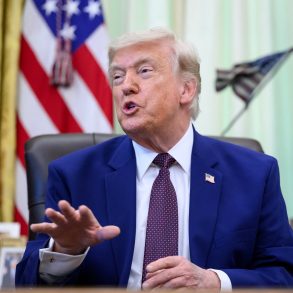
“The system is not working,” Hilton argued, positioning himself as a leading critic of the status quo. He also leaned into his endorsement from former President Donald Trump, saying a cooperative relationship with the White House would benefit California.
Homelessness became a flashpoint. Porter gave Newsom a “B” grade for his handling of the crisis, citing progress in addressing housing shortages. Hilton fired back, saying the governor deserved an “F,” highlighting stark partisan divides over the issue.
On the Democratic side, tensions were more subtle but still evident. Steyer, a billionaire investor, has used his personal wealth to boost his campaign and framed himself as a progressive willing to tax the ultra-rich. That message drew criticism from rivals, including Mahan, who attacked Steyer’s past business dealings.
Porter emphasized her relatability, presenting herself as a middle-class parent who understands everyday financial struggles. Becerra pointed to his experience, arguing the state needs a steady hand in times of crisis. Mahan, meanwhile, leaned on his leadership in Silicon Valley, highlighting his familiarity with emerging technologies like artificial intelligence.
The debate also touched on controversies. Porter addressed criticism over her treatment of a staffer, acknowledging it fell short of expectations. Becerra responded to questions about whether he could have acted sooner regarding allegations surrounding Swalwell, stating that “rumors are not facts” while supporting those who came forward.
Bianco, the Riverside County sheriff, defended his controversial investigation into election ballots, while also warning about voter confidence. His comments reflected broader Republican concerns about election integrity, though critics have pushed back on such claims.
The broader political landscape adds another layer of uncertainty. California’s “jungle primary” system means the top two vote-getters advance to November, regardless of party. With Democrats split among several candidates, there is growing concern within the party that two Republicans could theoretically advance—a rare scenario in a heavily Democratic state.
Party leaders, including state chair Rusty Hicks, have urged lower-polling Democrats to drop out to consolidate support. Still, with ballots set to go out soon, time is running short to reshape the field.
As Californians grapple with economic anxiety and rising living costs, the next governor will face significant pressure to deliver solutions. For now, however, the race remains as unpredictable as ever—leaving voters with choices, but few clear answers.