

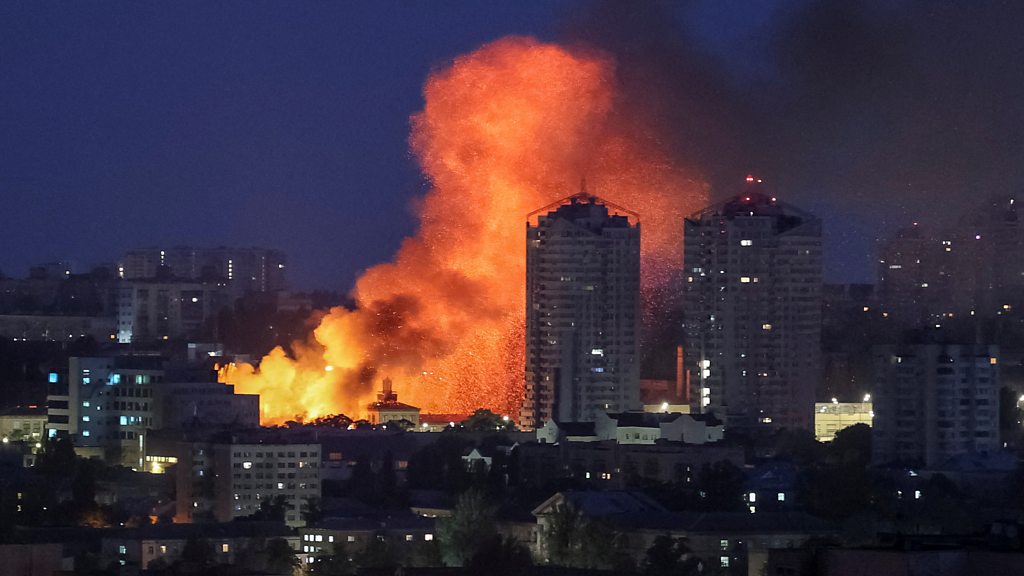
On June 6, 2025, Russia unleashed one of the largest air assaults of the ongoing war, bombarding Ukraine with over 400 drones and 40 missiles, including ballistic and cruise missiles, in a devastating overnight attack. This barrage, which killed at least three people and injured dozens across regions from Lviv to Sumy, came just days after Ukraine’s bold “Spider Web” operation targeted and destroyed a significant portion of Russia’s strategic bomber fleet. The assault left Kyiv’s residents under a familiar siege of air raid sirens, drone buzzes, and explosions, as apartment buildings burned and debris littered the streets.
A Retaliatory Strike
The Russian Ministry of Defense claimed the attack was a direct response to Ukraine’s “terrorist acts,” specifically referencing Kyiv’s June 1 drone raid that struck 34% of Russia’s nuclear-capable bombers at airfields as far as Siberia. Ukrainian President Volodymyr Zelenskyy condemned the strikes, noting that they targeted civilians and infrastructure across nearly all of Ukraine. “Russia must be held accountable,” he said, emphasizing that Moscow’s actions aim “to destroy life.” In Kyiv alone, conflicting reports emerged, with Zelenskyy citing three deaths and Mayor Vitali Klitschko reporting four, alongside 20 injuries and widespread damage to residential areas.
Ukraine’s air force reported that of the 452 projectiles launched, 406 were neutralized, including 32 cruise missiles and four ballistic missiles. Despite these defenses, the attack caused significant destruction, with fires in Kyiv’s apartment blocks, power outages in Ternopil, and injuries in Lutsk and Chernihiv. In Ternopil, poisonous smoke from struck energy infrastructure prompted warnings to keep windows closed, while Lutsk saw residential buildings hit, injuring 15.
Ukraine’s Defiance
The Russian assault followed Ukraine’s audacious “Spider Web” operation, which targeted Russia’s strategic bombers used to launch missile strikes on Ukrainian cities. On Thursday night, Ukraine struck two additional Russian airfields in Saratov and Ryazan, further escalating tensions. Ukrainian Foreign Minister Andrii Sybiha accused Russia of retaliating by “attacking civilians,” underscoring the human cost of Moscow’s response.
In Kyiv, residents remained resilient. Olha, a 39-year-old local, told CNN, “It didn’t break us at all. The morale is as high as it was.” She noted that Russia’s strikes, while devastating, felt like just another night in a war that has raged for over three years. “Maybe this was the retaliation, but maybe it’s yet to come,” she said, reaffirming support for Ukraine’s military actions against Russia.
Global Implications
The timing of Russia’s attack raised questions about international responses, particularly after a call between Russian President Vladimir Putin and U.S. President Donald Trump. Putin reportedly warned of retaliation for Ukraine’s strikes, but Trump’s response—likening the war to a children’s fight—drew criticism in Ukraine. Lawmaker Oleksandr Merezhko expressed frustration, stating, “When Putin mentioned he is going to avenge… we know what it means. It’s about civilians.” Zelenskyy called for global pressure on Russia, warning that inaction equates to “complicity.”
As both sides continue their tit-for-tat strikes, with Russia intercepting 174 Ukrainian drones and Ukraine targeting Russian airfields, the war shows no signs of abating. The recent peace talks in Istanbul failed to secure a ceasefire, leaving Ukraine to face Russia’s wrath while holding firm in its resolve to fight back.