Picture this: cargo ships lined up at the Port of Los Angeles, a bustling hub of global trade, suddenly facing a storm of new tariffs that could grind their engines to a halt. On one side, President Donald Trump is rolling out what he calls “Liberation Day”—a wave of steep tariffs aimed at reshaping America’s economic landscape. On the other, California Governor Gavin Newsom is stepping up, vowing to fight back and keep the Golden State’s trade flowing. As of April 4, 2025, the battle lines are drawn, and California is ready to flex its economic muscle.
Trump’s latest tariff plan, announced earlier this week, hits hard. A baseline 10% tariff on all imported goods kicks in at midnight tonight, with even higher rates—24% on Japan, 25% on South Korea, and a whopping 34% on China—piled on top. Trump calls these “reciprocal” tariffs, meant to mirror what other countries charge the U.S., but critics argue they’re more like a sledgehammer than a handshake. Global markets are already reeling; on Thursday, the Dow, S&P 500, and Nasdaq saw their worst drops since the COVID-19 crash of 2020. China fired back with matching tariffs, escalating fears of a full-blown trade war.
For California, the stakes couldn’t be higher. The state’s economy—14% of the entire U.S. GDP—relies heavily on trade. From almonds and avocados to tech gadgets and electronics, California’s exports are a lifeline for farmers, manufacturers, and Silicon Valley giants. The ports of Los Angeles, Long Beach, and Oakland, along with the sprawling logistics network in the Inland Empire, keep goods moving in and out. But Trump’s tariffs threaten to choke that flow, jacking up prices and slamming industries that depend on affordable imports. “It’s going to have a huge impact on manufacturing and supply chains,” warned economist Kevin Klowden of the Milken Institute. “We just don’t have the capacity to make everything here at a competitive cost.”
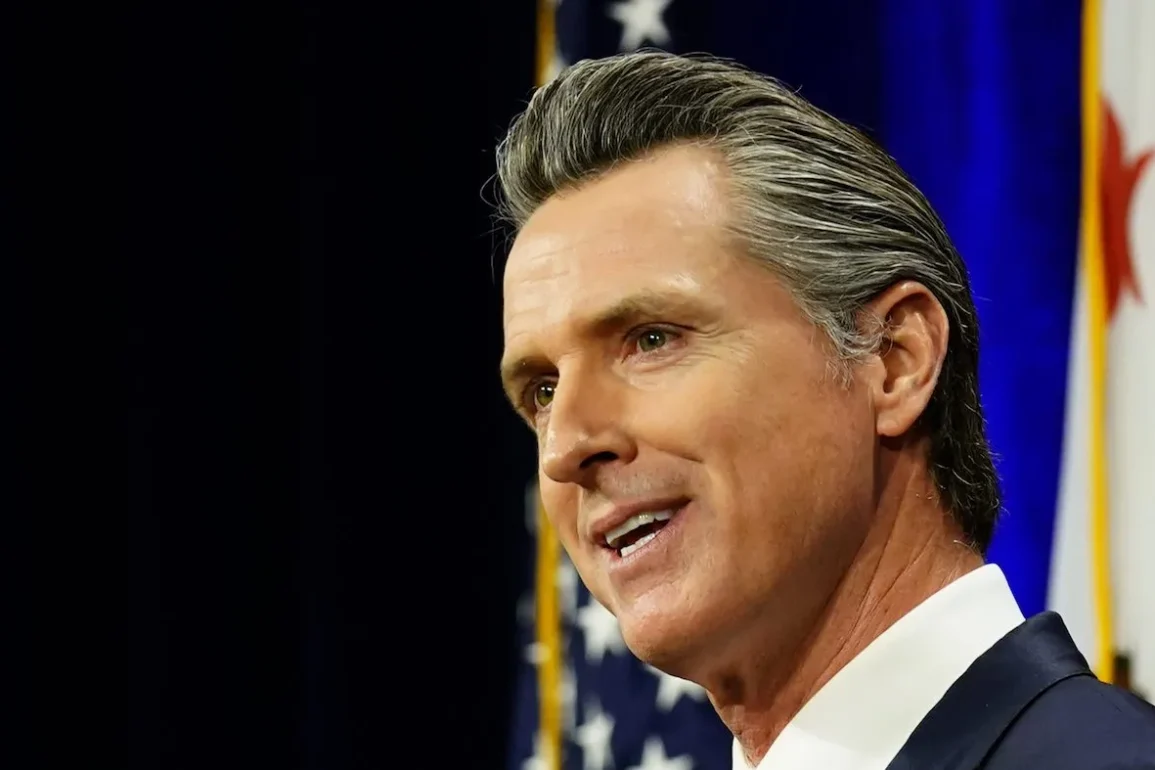
Enter Gavin Newsom. On Friday, the governor took to X, declaring, “We’re not scared to use our market power to fight back against the largest tax hike of our lifetime.” In a video message, he pitched California as “the tent pole of the U.S. economy” and urged international partners to see the state as a “steady, reliable partner” despite the chaos coming out of Washington, D.C. His plan? Find ways to expand trade and convince other countries to exempt California from their retaliatory tariffs. “California is not Washington, D.C.,” Newsom emphasized in a press release. “The Golden State will remain a beacon of stability for generations to come.”
It’s a bold move—but can it work? Experts like Jonathan D. Aronson, a trade specialist at USC, say Newsom has no power to stop Trump’s tariffs directly. That means higher prices for imported goods like cars and construction materials are likely inevitable. Still, Aronson sees a sliver of hope. “California exports a lot—almonds, avocados, tech,” he said. “Newsom might persuade some nations not to hit those industries with retaliatory tariffs. It’s like saying, ‘Hey, don’t punish us for Trump’s decisions—we’re still good to deal with.’”
Newsom’s team is already brainstorming. They’re looking at “collaborative opportunities” with trading partners to protect jobs, boost innovation, and secure supplies—like the construction materials desperately needed after last year’s devastating Los Angeles firestorms. But it’s a tricky pitch, especially with heavyweights like China, which supplies nearly 30% of California’s imports. “China only cares about China,” Aronson warned. “How much will they listen? Hard to say.”
The White House isn’t impressed. Spokesman Kush Desai shot back, “Gavin Newsom should focus on homelessness, crime, and unaffordability in California instead of playing at international dealmaking.” It’s a jab that highlights the political tension between Trump and Newsom, who’ve clashed repeatedly over the years. California has sued Trump’s administration over 120 times since his first term, often winning on issues like immigration and the environment. Now, with Trump pulling the U.S. out of the Paris Climate Agreement (again) and pushing these tariffs, Newsom is doubling down on his resistance.
He’s not alone. Illinois Governor JB Pritzker just signed a trade deal with Mexico, stressing cooperation in manufacturing and agriculture. But Newsom’s vision is bigger—more ambitious and riskier. With 40 million residents and a GDP that rivals entire countries, California has the clout to make waves. Over the years, Newsom and his predecessor, Jerry Brown, have built ties with leaders in Canada, Mexico, Japan, China, and beyond, often bypassing the White House entirely. Just last year, Newsom inked climate deals with Italy and several Chinese provinces, proving California can go it alone.
Still, the road ahead is bumpy. Tariffs could shrink California’s state budget, which leans on taxes from wealthy investors and stock market gains—gains that vanish when markets crash. And at the Port of Los Angeles, where ships tower over San Pedro’s skyline, workers are bracing for a slowdown. Car buyers in Southern California are already racing to dealerships, hoping to beat the price hikes.
Trump, meanwhile, is celebrating. “This is our declaration of economic independence,” he boasted Wednesday, calling the tariffs a historic turning point. For him, it’s about bringing jobs back to America. For Newsom, it’s about keeping California afloat in a global economy that’s starting to look like a battlefield.
So, who wins? No one knows yet. If Newsom pulls it off, California could dodge the worst of the trade war’s fallout and cement its reputation as a powerhouse that doesn’t bow to Washington. If he fails, the state might get swept up in the chaos anyway, proving that even a giant like California can’t outrun a national policy this massive. One thing’s for sure: the fight’s just getting started, and the world is watching.