

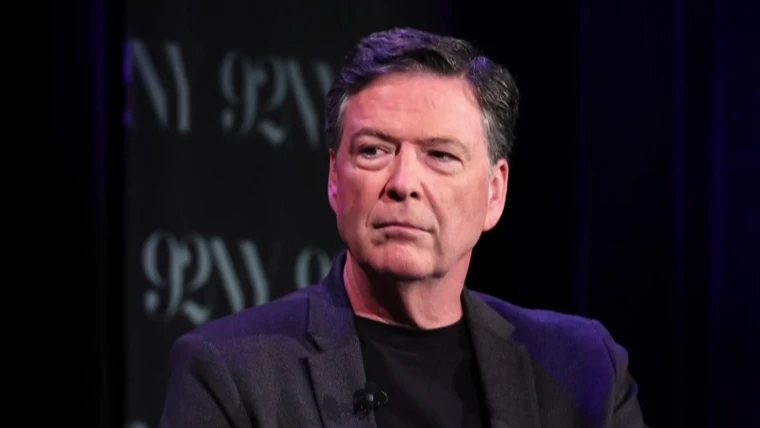
Former FBI Director James Comey has been charged in a new federal indictment related to an Instagram photo he posted last year. The image showed seashells arranged on a beach to spell out “8647.” Trump allies claimed the post was a threat against President Donald Trump.
A federal grand jury in the Eastern District of North Carolina returned the two-count indictment on Tuesday. Prosecutors say that a “reasonable recipient” familiar with the situation would see the photo as “a serious expression of an intent to do harm” to the president. The case was investigated by the Department of Homeland Security and involved questioning by the Secret Service. Comey owns a beach house in the area where the photo was taken.
The numbers “86 47” have drawn attention for their possible meanings. “Eighty-six” is restaurant slang for getting rid of something or saying it is no longer available. It can also informally mean “cancel” or “remove.” The “47” is widely understood as a reference to Trump’s current term as the 47th president. Critics interpreted the combination as a veiled call to harm or remove Trump from office.
Comey quickly deleted the post. In a follow-up message on Instagram in May 2025, he explained that he had been walking on the beach and thought the shell formation was simply a clever political message. He said it never crossed his mind that others might link the numbers to violence. Comey added that he opposes violence “of any kind.” He later described the accusations as “crazy” in media interviews.
Trump administration officials reacted strongly at the time. Then-Homeland Security Secretary Kristi Noem called Comey the “disgraced” former FBI director and said Secret Service agents had interviewed him. Director of National Intelligence Tulsi Gabbard suggested he should be “put behind bars for this.”
Comey’s lawyer had no immediate comment on the new charges. The White House directed all questions to the Justice Department.
This is the second time the Trump administration has indicted Comey. Earlier charges accused him of lying to Congress and obstructing a congressional investigation. Those cases centered on testimony Comey gave in 2017 and 2020 about an FBI investigation. A judge later dismissed the first set of charges, ruling that the prosecutor—a former lawyer for Trump—had been unlawfully appointed. Prosecutors generally face a low bar to secure an indictment from a grand jury; they only need to show probable cause, not prove guilt beyond a reasonable doubt as required at a full trial.
The relationship between Trump and Comey has been tense for years. Trump, a lifelong Republican at the time, fired Comey as FBI director in May 2017. That decision led to the appointment of Special Counsel Robert Mueller to investigate Russian interference in the 2016 election, which often frustrated the president.
The new indictment revives debate about where political speech ends and a true threat begins. Legal experts have previously noted that similar cases can be difficult to prosecute successfully. Comey has maintained that the photo was innocent and that he did not intend any violence.
The case is still in its early stages, and Comey is presumed innocent until proven guilty in a court of law. It adds another chapter to the long-running conflict between the former FBI director and the current president.