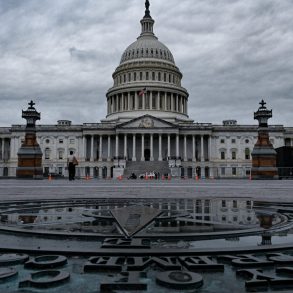


A Democrat-backed effort to limit President Donald Trump’s ability to continue military action against Iran has failed once again in the House of Representatives. The vote came just one day after a similar resolution was blocked in the Senate.
The House war powers resolution fell short in a very close vote of 213-214 on Thursday. It was mostly a symbolic move, since it had almost no chance of becoming law. Even if it had passed both chambers of Congress, President Trump was expected to veto it.
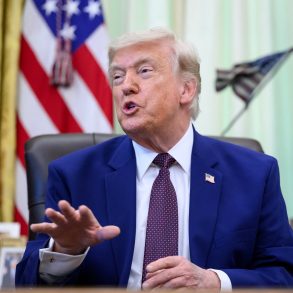
Most Republicans voted against the resolution in both the House and Senate. However, some have hinted that they might change their minds if the conflict lasts longer than expected or grows wider. Trump has given changing updates on how long the fighting will last. His most recent comment was that the war is “close to over.”
In the House vote, Rep. Thomas Massie of Kentucky was the only Republican to support the measure. On the Democratic side, Rep. Jared Golden of Maine was the only one to vote against it. Rep. Warren Davidson of Ohio, who had backed a similar effort in March, voted “present,” which means he did not take a side.
Rep. Gregory Meeks of New York, the Democrat who introduced the resolution, said afterward that he would keep working to gain support from lawmakers like Golden. He also plans to bring forward another war powers resolution soon. Democrats say they want to push Congress to reclaim its role in deciding when the United States goes to war.
This was not the first try. An earlier version of the resolution failed in the House last month by a narrow margin. At that time, two Republicans voted in favor and four Democrats voted against it.
The Senate rejected its version of the resolution on Wednesday in a mostly party-line vote of 47-52. Even if both houses had approved the measure, it would not have overcome a presidential veto.
The conflict began on February 28 when the United States and Israel launched strikes on Iran. Federal law, known as the War Powers Resolution of 1973, requires the president to get approval from Congress if military action continues beyond 60 days. Congress passed that law after the Vietnam War to limit the president’s power to keep fighting without lawmakers’ consent. The 1973 measure was aimed at checking then-President Richard Nixon’s authority.
Some Republicans have said their support for the president’s actions could shift if the war drags on or expands. For now, however, most GOP lawmakers continue to back Trump’s handling of the situation, leaving Democrats frustrated in their attempts to reassert congressional oversight over military decisions. Democrats have promised to keep introducing these resolutions in the weeks ahead.