

A growing majority of Americans support requiring photo identification to vote, but the issue remains deeply divisive in Washington as Democrats in Congress continue to oppose Republican-led efforts to mandate it nationwide.
At the center of the debate is the proposed SAVE America Act, a sweeping elections bill backed by Republicans. One of its most prominent provisions would require voters to present government-issued photo ID at the polls—a policy that polling suggests is widely popular across the country.
An August survey from the Pew Research Center found that 83% of U.S. adults support voter ID requirements, including 71% of Democrats, 83% of independents, and 76% of Black voters. Support for the policy has steadily increased over time, rising from 77% in 2012.
Republican lawmakers have seized on those numbers to argue that voter ID laws are a matter of common sense. Senate Majority Leader John Thune said the widespread support shows that most Americans view identification requirements as reasonable, not restrictive.
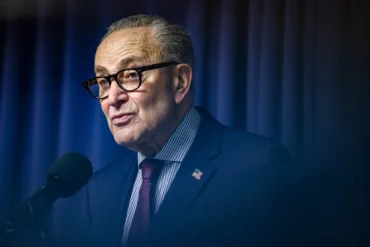
However, many Democrats say the issue is more complicated than it appears. Senate Minority Leader Chuck Schumer has strongly criticized the SAVE America Act, comparing it to discriminatory laws from the Jim Crow era and warning that it could disenfranchise millions of eligible voters.
While Democrats acknowledge the popularity of voter ID requirements, they argue the broader bill includes provisions that go far beyond showing identification at the polls. For example, the legislation would require proof of citizenship—such as a passport or birth certificate—to register to vote, a higher threshold that critics say could create barriers for many Americans.
Even some Democrats open to voter ID rules remain opposed to the bill as written. Senator John Fetterman said he understands the public’s support for ID requirements but still rejects the legislation due to its additional measures.
Opponents also point to proposals that would allow federal agencies to review state voter rolls and flag suspected noncitizens, arguing that such steps could lead to wrongful removals before voters even have a chance to cast a ballot.
Outside experts and advocacy groups largely align with Democratic concerns. Leaders at organizations like the NAACP Legal Defense Fund argue that no single form of identification is universally accessible enough to justify a nationwide mandate. They also note that documented cases of noncitizen voting are extremely rare.
Some Democrats say their objection is not to voter ID itself, but to how it is implemented. Senator Raphael Warnock has said voters should be able to prove their identity, but warned that certain ID rules can be designed in ways that disproportionately exclude specific groups.
Others raise concerns about practical barriers. Representative Brad Schneider noted that requirements involving birth certificates or passports could disproportionately affect people who have changed their names, including many married women, or those who lack easy access to official documents.
Meanwhile, Representative Marc Veasey pointed to past examples at the state level where certain forms of ID were accepted while others—such as student IDs—were not, raising concerns about fairness and intent.
Despite the sharp disagreements, some political observers believe there may be room for compromise. Proposals such as a national ID system tied to existing federal programs have been floated as a way to balance election security with accessibility.
For now, however, the divide remains clear: while voter ID laws enjoy broad public support, the broader policies attached to them continue to fuel a contentious debate over voting rights, election integrity, and access to the ballot box in the United States.