
On September 8, 2025, the Trump administration launched “Operation Midway Blitz,” an Immigration and Customs Enforcement (ICE) crackdown targeting undocumented immigrants in Chicago. The operation, announced by the Department of Homeland Security (DHS) on social media, aims to detain individuals with criminal records, but it has sparked strong opposition from local leaders who argue it’s more about fear than fighting crime.
The DHS stated that the operation targets “criminal illegal aliens” who, they claim, have been drawn to Chicago and Illinois due to the state’s sanctuary city policies. These policies, supported by Governor JB Pritzker and Chicago Mayor Brandon Johnson, prevent local police from cooperating with federal immigration authorities unless a criminal warrant is issued. The DHS highlighted the operation as a tribute to Katie Abraham, a 20-year-old Illinois woman killed in a January hit-and-run crash allegedly caused by an undocumented Guatemalan man. The agency posted mugshots of 11 men it claims are dangerous criminals protected by these sanctuary policies.
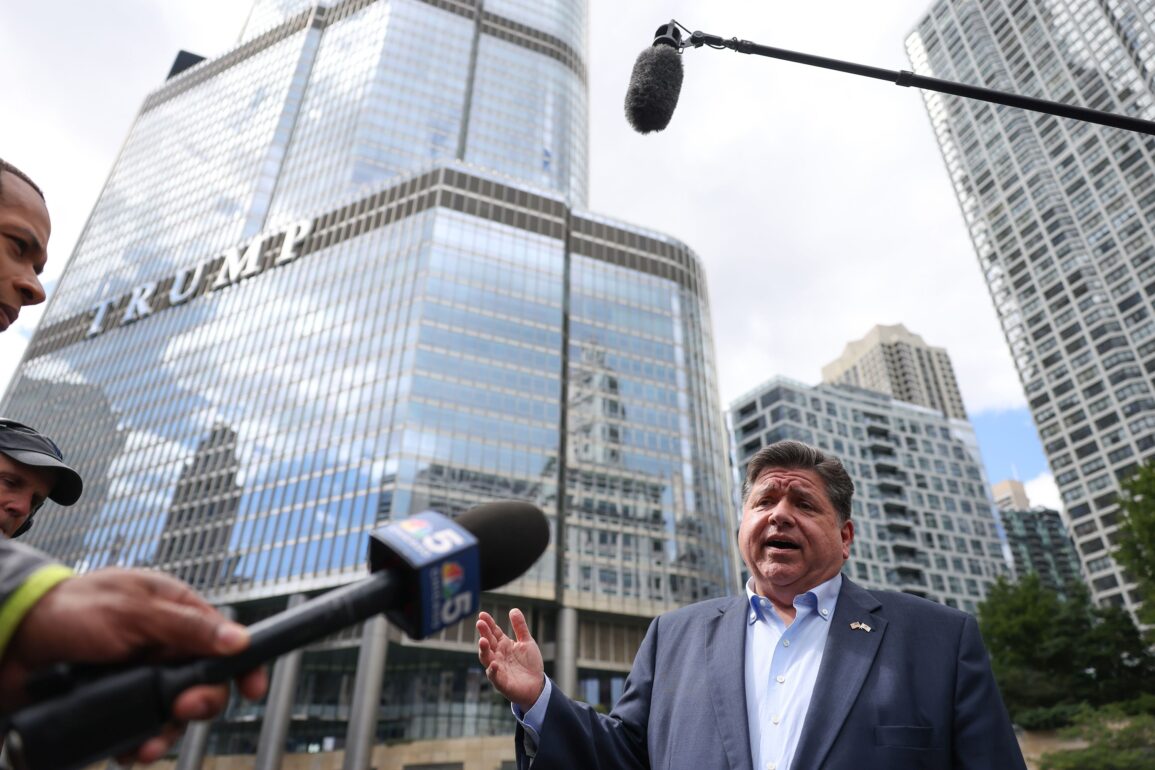
However, Pritzker and Johnson have criticized the operation as a political stunt designed to intimidate residents, particularly in Chicago’s Latino communities. Pritzker stated on X, “This isn’t about fighting crime. That requires support and coordination — yet we’ve experienced nothing like that over the past several weeks.” He accused the Trump administration of focusing on “scaring Illinoisans” rather than working with local officials on public safety. Similarly, Mayor Johnson noted that Chicago received no prior notice of the operation and expressed concerns about “militarized immigration enforcement without due process.” He pointed to ICE’s history of detaining American citizens and violating detainees’ rights, citing over 500 documented human rights abuses at detention facilities since Trump took office.
Local activists and officials echoed these concerns. Chicago City Council member Jeylú Gutiérrez called the operation an attempt to “terrorize our communities,” noting that among the five people arrested over the weekend, some were “beloved community members,” including a flower vendor and others on their way to work. Immigrant rights groups have mobilized, setting up hotlines to report ICE activity and distributing information about legal rights. Protests have erupted across the city, from downtown to a suburban naval base used as a hub for ICE operations.
The operation comes amid broader tensions. President Trump has repeatedly threatened to send National Guard troops to Chicago to address crime, a move he’s already implemented in Los Angeles and Washington, D.C. However, a federal judge in California ruled the use of the National Guard in Los Angeles illegal, and Pritzker has vowed to take legal action if troops are deployed in Chicago. Despite Trump’s claims of rising crime, local data shows Chicago’s homicide rates are at their lowest since the 1960s, a point Johnson emphasized in a New York Times op-ed, crediting community and law enforcement collaboration.
The operation’s scope remains unclear, with DHS providing few details on its duration or scale. Meanwhile, the Supreme Court recently lifted restrictions in Southern California, allowing ICE agents to detain individuals based on race, ethnicity, or language, raising fears of profiling in Chicago. U.S. Senator Dick Durbin called the operation “wasteful, ineffective, inhumane,” arguing it stokes fear rather than enhancing safety.
As Chicago braces for potential escalation, the clash between federal and local authorities underscores a deeper debate over immigration enforcement and sanctuary city policies. While the Trump administration pushes its hardline agenda, local leaders and residents remain united in their resistance, determined to protect their communities from what they see as unjust targeting.