

At least six commercial vessels were struck in a wave of maritime attacks across the Persian Gulf and nearby waters this week, as tensions from the widening war with Iran spill into one of the world’s most important energy shipping routes.
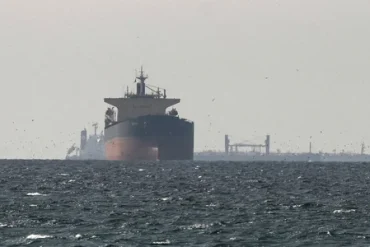
Two fuel tankers were severely damaged in Iraqi waters late Wednesday after what officials described as explosive-laden boats slammed into the vessels, setting both ships on fire and killing one crew member. The attacks came alongside several other strikes on commercial ships near the Strait of Hormuz, raising fears that shipping in the region could grind to a halt.
According to Iraqi port officials, the targeted tankers were the Safesea Vishnu, registered in the Marshall Islands, and the Zefyros, which had recently loaded fuel cargo in Iraq. Rescue teams recovered the body of a foreign crew member from the water while continuing to search for others who may be missing.
Farhan al-Fartousi, director of Iraq’s General Company for Ports, said emergency crews rescued 25 sailors from the two burning ships. Fires were still burning on both vessels as responders worked to contain the damage.
India’s embassy in Baghdad confirmed that one Indian crew member aboard the Safesea Vishnu was killed in the attack. The remaining 15 Indian sailors from the tanker were safely evacuated and moved to a secure location.
Following the incident, Iraqi authorities halted operations at the country’s oil terminals, though commercial ports remain open.
Officials described the strikes as sabotage and condemned the attack as a violation of Iraq’s sovereignty because it occurred inside Iraqi territorial waters.
Wider attacks across the Gulf
The tanker assaults were part of a broader series of maritime incidents affecting multiple ships in and around the Strait of Hormuz, a narrow passage that normally carries about one-fifth of the world’s oil supply.
A Thai bulk carrier, the Mayuree Naree, was struck by two projectiles while traveling through the strait. The impact sparked a fire and damaged the ship’s engine room. Twenty crew members were evacuated safely to Oman, but three sailors were initially reported missing and believed to be trapped inside the vessel.
Another vessel, the Japan-flagged container ship ONE Majesty, sustained minor damage from a projectile while anchored in the Gulf. The ship’s owner said the hull was slightly damaged above the waterline but the vessel remained seaworthy and all crew members were unharmed.
A third ship, the Marshall Islands-flagged bulk carrier Star Gwyneth, was also hit by an unidentified projectile while anchored northwest of Dubai. Maritime security firm Vanguard said the ship’s hull was damaged but no crew members were injured.
In a separate incident, the United Kingdom Maritime Trade Operations center reported that an unidentified projectile struck another container ship north of Jebel Ali in the United Arab Emirates, causing a small onboard fire.
Drone boats and mines suspected
Early reports from security officials suggest that some of the attacks may have involved unmanned explosive boats similar to those used in recent naval conflicts. Two sources told Reuters that roughly a dozen sea mines may also have been deployed in the Strait of Hormuz.
The escalating attacks come as Iran warns it will target vessels attempting to pass through the waterway. The country’s Islamic Revolutionary Guard Corps has reportedly said any ship transiting the strait could be considered a target.
Iran’s newly installed supreme leader, Ayatollah Mojtaba Khamenei, said the strait would remain effectively closed as a form of pressure against the United States and its allies.
Shipping at growing risk
The attacks have shaken the global shipping industry. Shipping companies have been asking for naval escorts through the strait, but sources say the U.S. Navy has declined those requests so far, citing the extreme risk posed by mines and drone boats.
The closure of the Strait of Hormuz has already triggered turmoil in global energy markets. Analysts say the disruption could represent one of the largest oil supply shocks in history, as millions of barrels of crude oil per day normally pass through the waterway.
With several vessels damaged and oil terminals suspending operations, the latest attacks underscore how quickly the conflict is spreading beyond the battlefield and into the arteries of the global economy.