

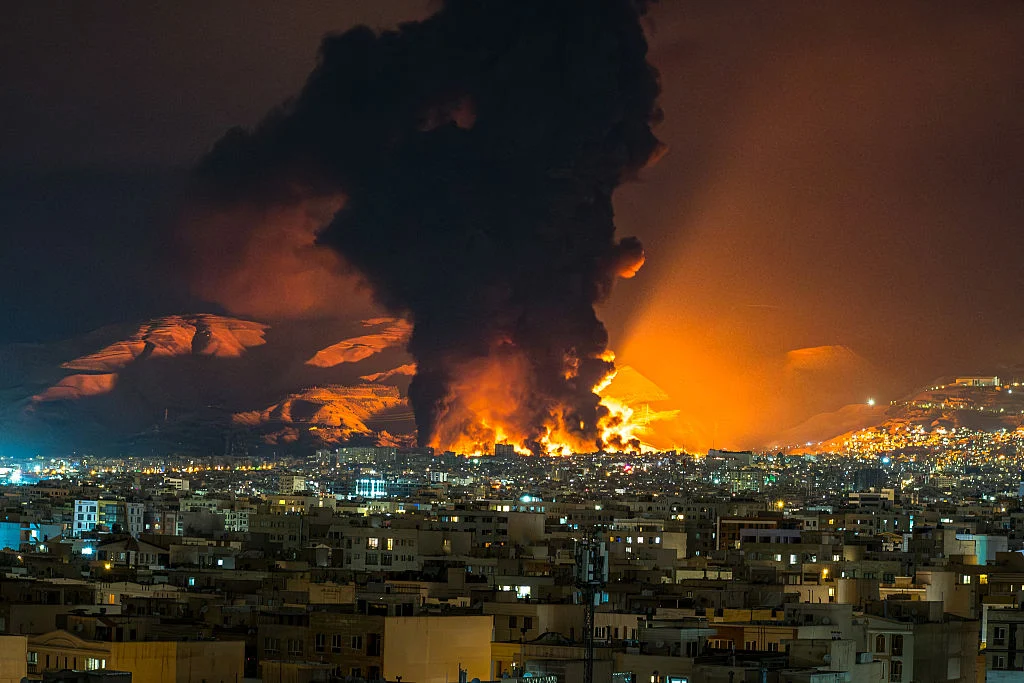
Tensions in the Middle East escalated sharply this week as Iran warned that no oil shipments would pass through the critical shipping lane known as the Strait of Hormuz, raising fears that global oil prices could soar to $200 per barrel.
The warning came from Iran’s powerful military branch, the Islamic Revolutionary Guard Corps (IRGC), which said it would block vessels linked to the United States, Israel, or their allies while fighting continues in the ongoing US–Israel war on Iran.
In a statement on Wednesday, a spokesperson for the IRGC’s Khatam al-Anbiya headquarters said the group would not allow “a litre of oil” to pass through the strait and warned that ships connected to Iran’s enemies would be treated as legitimate targets.
“You will not be able to artificially lower the price of oil,” the spokesperson said. “Expect oil at $200 per barrel. The price of oil depends on regional security, and you are the main source of insecurity in the region.”
A vital global oil route
The Strait of Hormuz is one of the world’s most important energy corridors. Roughly one-fifth of the planet’s oil supply normally travels through the narrow waterway between Iran and Oman.
Its closure has already rattled global markets. Oil prices have swung dramatically in recent days as the conflict intensifies and attacks spread across the region.
On Wednesday alone, three commercial ships were reportedly struck by projectiles near the strait. One of them was a Thai-flagged cargo ship that came under attack about 11 nautical miles north of Oman. Images released by Thailand’s navy showed smoke rising from the vessel after the strike.
Despite the danger, U.S. President Donald Trump urged ships to continue traveling through the waterway.
“I think they should,” Trump said when asked if vessels should keep transiting the strait. “I think you’re going to see great safety, and it’s going to be very, very quickly.”
Global response to the oil shock
With markets in turmoil, countries around the world are taking emergency measures to stabilize energy supplies.
The International Energy Agency (IEA) announced that its 32 member countries had agreed to release a massive 400 million barrels of oil from emergency reserves. The move is intended to ease shortages and slow rising prices while the strait remains closed.
“This is a major action aiming to alleviate the immediate impacts of the disruption in markets,” said IEA Executive Director Fatih Birol.
However, he emphasized that releasing reserves is only a temporary solution. The real key to stabilizing energy markets, he said, is reopening the Strait of Hormuz.
Several countries have already begun preparing to tap their stockpiles. Japan announced plans to release about 80 million barrels from its national and private reserves, while European governments are also preparing similar steps.
Humanitarian concerns
The disruption is not only affecting oil shipments. Aid officials warn that the conflict and the closure of the shipping lane are also blocking vital humanitarian deliveries.
Tom Fletcher, the United Nations’ top humanitarian official, urged all parties in the conflict to allow aid shipments through the waterway.
“We’re appealing to all the parties to secure those routes, including the Strait of Hormuz, for our humanitarian traffic,” Fletcher said. “We’re living through a moment right now of grave peril.”
Risk of a wider shipping crisis
Experts say the longer the strait remains closed, the greater the danger of a major global shipping crisis.
Christian Bueger, a maritime security expert at the University of Copenhagen, warned that the situation could escalate quickly if ships continue avoiding the area.
“For the shipping industry right now, it’s impossible to go through the Strait of Hormuz,” he said. “If there are not stronger signals soon that ships can safely pass, we are looking at a major shipping crisis that could last weeks or even months.”
With the conflict showing no signs of slowing, energy markets and shipping companies are bracing for continued turbulence — and potentially much higher oil prices in the weeks ahead.