
In early January 2026, President Donald Trump’s second term took a dramatic turn toward aggressive military action in the Western Hemisphere, marking a shift from his first year’s focus on global peace deals to a bold display of American power.
The turning point came on January 3, when U.S. special forces launched a daring raid in Caracas, Venezuela, capturing President Nicolás Maduro and his wife, Cilia Flores. The operation, justified by the Trump administration as a law-enforcement action against narcoterrorism (based on long-standing U.S. indictments), involved strikes on a fortified compound and resulted in significant casualties—reports vary, but Venezuelan officials claimed around 100 deaths, while prior U.S. strikes on alleged drug boats had already killed over 100 people. Maduro was flown to New York, where he pleaded not guilty to federal charges in a Manhattan court.
Trump declared victory, stating the U.S. would temporarily “run” Venezuela to restore order, get its oil flowing, and ensure a safe transition. He emphasized that the action sent a strong message: “Maduro effed around and found out,” as Defense Secretary Pete Hegseth put it.
This bold move has sparked fears of further interventions. Trump and his allies have hinted at targeting other nations in America’s “backyard,” including adversaries like Cuba and partners like Colombia and Mexico, over issues such as drug trafficking, migration, and perceived instability.
- Cuba was described by Trump as a “failing nation” similar to Venezuela, heavily reliant on Venezuelan oil. With that supply disrupted, some experts believe the Cuban regime could collapse on its own, though Secretary of State Marco Rubio (a Cuban American with a long history of advocating for regime change) has suggested the U.S. might act if needed.
- Colombia drew sharp criticism from Trump, who accused its leftist President Gustavo Petro of involvement in cocaine production and trafficking. Trump warned that Petro “won’t be doing it very long,” prompting Petro to defend his country and reject the accusations.
- Mexico faces pressure to do more against fentanyl and migration, with Trump stating, “Mexico has to get their act together… and we’re going to have to do something.”
Beyond Latin America, Trump has revived his interest in acquiring Greenland, a Danish territory he has eyed since his first term for strategic Arctic reasons. He told reporters he prefers a deal “the easy way,” but if not, “we’re going to do it the hard way.” The administration has refused to rule out military options, calling it a “strategic imperative.”
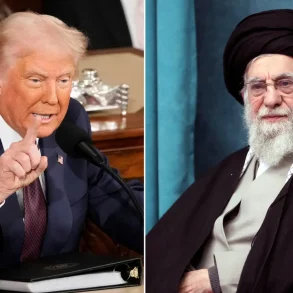
Trump has also referenced reclaiming control of the Panama Canal and issued warnings to Iran about potential further strikes.
These threats align with what Trump calls the “Donroe Doctrine”—a modern, aggressive twist on the 19th-century Monroe Doctrine, which warned foreign powers against interfering in the Americas. Outlined in the administration’s National Security Strategy, it aims to keep the Western Hemisphere stable, free of mass migration, and free from hostile foreign influence (especially from China, Russia, or Iran) in key assets like oil, canals, and supply chains. Trump has framed it as “America First” and “peace through strength.”
The Venezuela operation has divided opinions at home. Some Republicans, including hawkish Sen. Lindsey Graham, praised it as a “big fricking day” that puts the world on notice. However, five Republican senators joined Democrats in supporting a Senate resolution to limit further strikes in Venezuela without congressional approval. Senate Minority Leader Chuck Schumer criticized it as risky “military adventurism” that could lead to endless wars.
Experts note that while more action in Venezuela remains possible (especially if interim leaders don’t cooperate), full invasions elsewhere—like in Colombia or Mexico—are seen as unlikely due to strong U.S. ties, economic links, and political realities. For instance, Petro’s term ends soon, and a “snatch and grab” in Colombia is viewed as improbable.
To support this muscular approach, Trump proposed a massive $1.5 trillion defense budget for 2027—a more than 50% increase over 2026 levels—calling it essential for a “dream military” in “troubled and dangerous times.” (Note: The Department of Defense has been rebranded with the secondary title “Department of War” via executive order, signaling a more assertive posture.)
As the dust settles from the Venezuela raid, the world watches to see if Trump’s warnings are bluster or the start of a broader campaign to reshape the Americas under U.S. dominance. For now, the “Donroe Doctrine” has put adversaries—and even some allies—on high alert.