
The Middle East edged closer to all-out war on Saturday, February 28, 2026, as Iran fired waves of retaliatory missiles and drones at Israel and multiple American military bases across the region. Iranian leaders called the U.S. and Israeli airstrikes earlier that day a “flagrant aggression” and a direct violation of the United Nations Charter. They promised to show “no leniency” in defending their country.
The day began with heavy U.S.-Israeli strikes on Iranian targets. Missiles and bombs hit military sites, missile storage facilities, air-defense systems, and compounds linked to top leaders in Tehran. Satellite images released later showed severe damage to a secure complex associated with Supreme Leader Ayatollah Ali Khamenei. Several buildings inside the compound appeared heavily damaged or destroyed. Iranian officials quickly stated that both Khamenei and President Masoud Pezeshkian were safe, despite what they described as assassination attempts during the bombing.
Tragedy struck hardest in southern Iran. Iranian media reported that more than 80 schoolchildren—mostly girls at an elementary school in Minab, Hormozgan province—were killed when a strike hit the area. Dozens more children and adults were injured. Ambulances rushed through the streets of central Tehran as smoke rose over the capital. Pictures also showed flames engulfing vehicles and Revolutionary Guards weapons warehouses that had been destroyed.
This was the second major U.S.-Israeli attack on Iran in less than a year. The timing made the situation even more explosive: Iran had been in the middle of delicate nuclear negotiations. Those talks, mediated by Oman’s foreign minister Badr Albusaidi, were meant to create a clear, verifiable agreement that would prevent Iran from obtaining materials for a nuclear bomb. Just one day earlier, Albusaidi had said he believed “peace was within reach.” The strikes, Tehran argued, were deliberately timed to destroy any chance of diplomacy.
Iran’s response came swiftly. The Iranian Foreign Ministry issued a strong statement posted on X: “The time has come to defend the homeland and confront the enemy’s military assault.” The ministry also called on Muslim and non-aligned countries to demand an emergency meeting of the United Nations Security Council.
Iran’s military confirmed it had launched drones and short-range missiles at several key targets. These included:
- al-Udeid Air Base in Qatar (a major U.S. command center),
- Ali al-Salem Air Base in Kuwait,
- al-Dhafra Air Base in the United Arab Emirates,
- Prince Sultan Air Base in Saudi Arabia,
- the U.S. base in Erbil, northern Iraq,
- Muwaffaq Salti Air Base in Jordan,
- and the U.S. Fifth Fleet headquarters in Bahrain.
A senior spokesperson for Iran’s armed forces issued a chilling warning: “We will give a lesson to [Israel and the U.S.] that they have never experienced in their history. Any base in the entire region that helps Israel will be a target of the sacred system of the Islamic Republic and we will show no leniency.”
Saudi Arabia and the United Arab Emirates quickly condemned Iran for violating their airspace and sovereignty. Both countries said they reserved the right to respond. Iran’s Foreign Minister Abbas Araghchi called his counterparts in Saudi Arabia, the UAE, Qatar, Kuwait, Bahrain, and Iraq. He told them the Gulf states had a responsibility to stop the United States from using their bases to launch illegal attacks on Iran.
Inside Iran, the government tried to calm the public while preparing for a longer fight. The Supreme National Security Council urged people in cities under attack to move to safer areas. At the same time, officials insisted there was no need to panic about supplies. The council stated: “Essential goods and fuel and medicine are abundantly available in the country. 24-hour medical services, centres and pharmacies will continue. Today is a test of national resistance for Iranians and despite all complaints and grievances we are united and in unison against foreign aggression.”
President Pezeshkian’s son, Youssef Pezeshkian, posted on Telegram: “As far as I know this time the assassination attempts were unsuccessful and other officials are also safe. We will probably have a longer conflict and it will be a war of attrition. Endurance and patience are essential to get through these days.”
The strikes have also stirred up Iran’s internal politics. Reza Pahlavi, the son of Iran’s last shah and a leading opposition voice living abroad, called for protesters to return to the streets. This message directly opposed the government’s instructions for people to leave cities, which many analysts believe was partly meant to prevent large crowds from gathering and protesting against the regime.
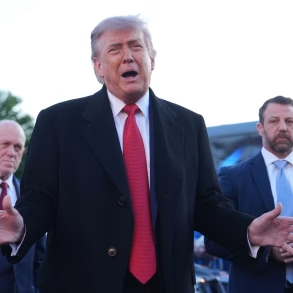
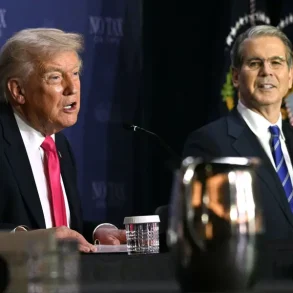
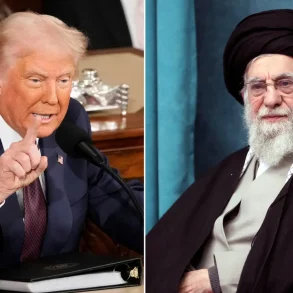
President Donald Trump addressed the Iranian people directly in a video message released as the strikes began. Speaking to “the great, proud people of Iran,” he said: “Bombs will fall everywhere. When we finish our work take control of your government.”
A lawyer close to Iran’s Foreign Ministry, Reza Nasri, sent a pointed message to Americans: “This is not your war. But you will pay for it with your soldiers’ lives, your national interests and your standing as Americans around the world. You will pay for it through the rise of anti-American sentiment globally, the tarnishing of your name, your flag and the hostile world your children will inherit.”
As night fell, explosions continued to light up the skies over parts of the region. Videos showed missiles streaking toward U.S. bases and smoke rising after strikes near Bahrain. It is still unclear whether the attacks will spark new street protests inside Iran or whether the shared sense of being under foreign attack will temporarily unite Iranians behind their leaders.
What is certain is that the fragile hopes for a nuclear deal have been shattered. Diplomats around the world are now scrambling to prevent the conflict from spreading further. For now, Iran’s vow of “no leniency” and its rapid retaliation have turned a dangerous situation into a full-scale crisis. The coming days will test whether this becomes a short, sharp exchange or the beginning of a long and painful war of attrition.