
Iran’s reformist President Masoud Pezeshkian announced on Tuesday, February 3, 2026, that he has directed the country’s foreign minister to pursue “fair and equitable negotiations” with the United States. This marks the clearest signal yet from Tehran that it is open to diplomacy amid soaring tensions with Washington.
The announcement comes after a period of high conflict, including Iran’s violent suppression of nationwide protests last month and the aftermath of a 12-day war in June 2025. During that conflict, Israel—backed by U.S. support—launched attacks, and President Donald Trump ordered the bombing of three Iranian nuclear sites.
Pezeshkian, a reformist leader, posted on X (in both English and Persian) that the decision followed requests from friendly regional governments to respond to Trump’s proposal for talks. He instructed Foreign Minister Abbas Araghchi to prepare for negotiations only if a suitable environment exists—one free from threats and unreasonable expectations. Pezeshkian emphasized that talks must follow principles of dignity, prudence, and expediency, while protecting Iran’s national interests.
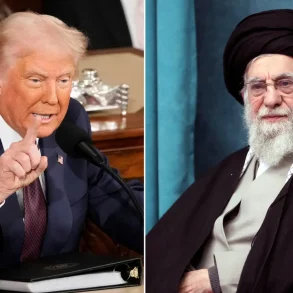
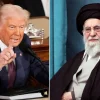
This shift represents a significant change for Pezeshkian, who had previously warned that domestic unrest had spiraled beyond his control. It also indicates backing from Supreme Leader Ayatollah Ali Khamenei, the 86-year-old cleric who holds ultimate power in Iran and had earlier rejected such discussions.
Regional mediation efforts, led by Turkey, appear to be driving the process. U.S. Mideast envoy Steve Witkoff is traveling in the region and is expected to meet Iranian officials, possibly in Istanbul on Friday. Foreign ministers from countries including Oman, Pakistan, Qatar, Saudi Arabia, the United Arab Emirates, Egypt, and others have been invited to participate or support the talks. The goal, according to a regional official, is to de-escalate tensions and prevent further conflict.
A top adviser to Khamenei, Ali Shamkhani, appeared in an interview on Al Mayadeen late Monday, wearing a naval uniform. He suggested that any talks would start indirectly and shift to direct negotiations only if progress seems possible. Shamkhani stressed that discussions would focus solely on nuclear issues, with Iran’s ballistic missiles remaining non-negotiable. He reiterated Iran’s long-standing claim that it does not seek nuclear weapons and will never stockpile them, but insisted the other side must offer concessions in return.
Iran has enriched uranium to 60% purity—a level close to weapons-grade and with no clear civilian use—making it the only non-nuclear-armed country to do so, according to the International Atomic Energy Agency (IAEA). Iran has refused IAEA inspections of the bombed nuclear sites, and Shamkhani noted that some enriched uranium stockpiles remain unknown due to rubble and safety risks.
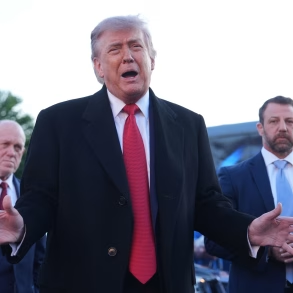
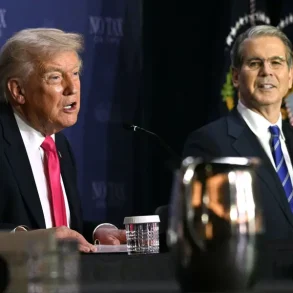
On the U.S. side, Trump has tied any deal to Iran’s nuclear program, demanding limits or concessions. He told reporters he prefers a negotiated deal but warned that failure could lead to “bad things.” The U.S. has not yet officially confirmed the talks.
Tensions escalated further on Tuesday when a U.S. Navy F-35C fighter jet from the USS Abraham Lincoln shot down an Iranian Shahed-139 drone that aggressively approached the aircraft carrier in the Arabian Sea, according to U.S. Central Command. The drone’s intent was unclear, but the action was described as self-defense. Separately, Iranian Revolutionary Guard fast boats and a drone harassed a U.S.-flagged tanker in the Strait of Hormuz, though the ship continued safely with U.S. escort.
Witkoff met Israeli Prime Minister Benjamin Netanyahu on Tuesday, where Israel pushed for strict terms in any deal: no nuclear program, no ballistic missiles, removal of enriched uranium, and an end to support for proxy groups threatening Israel.
Hard-liners remain skeptical. Former U.S. Secretary of State Mike Pompeo called a long-term deal “unimaginable” while Khamenei remains in power, though he suggested limited understandings might emerge.
A UAE official emphasized that Iran must rebuild its relationship with the U.S. through a nuclear deal to avoid more confrontations.
While the path to agreement remains uncertain—with deep differences over enrichment, missiles, and proxies—the announcement and ongoing regional efforts show a narrow window for diplomacy before further escalation. Whether indirect talks in Turkey lead to progress will be a key test in the coming days.