


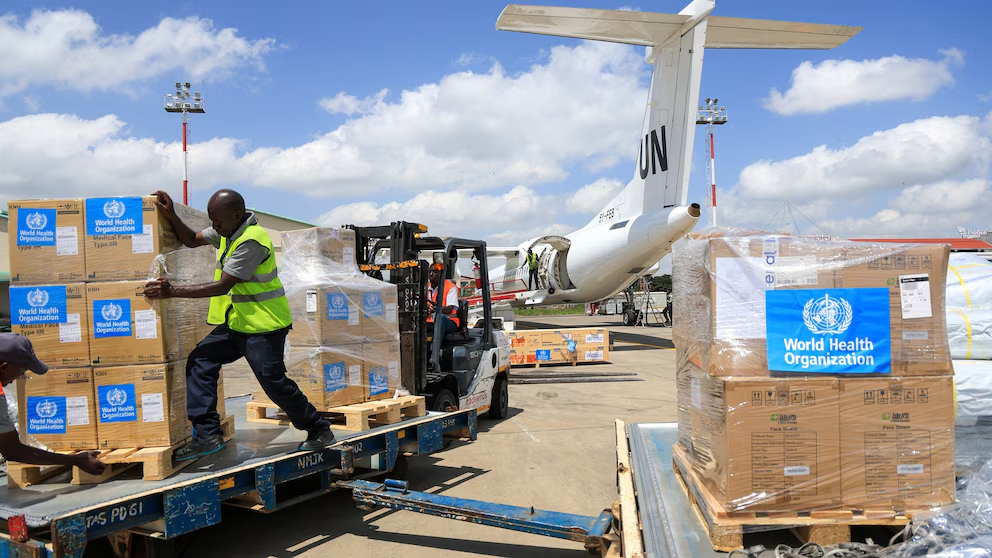
NAIROBI, Kenya — A Kenyan court has temporarily halted a U.S. plan to establish an Ebola quarantine facility in the country, following a legal challenge that raised concerns about risks to public health.
The United States had planned to set up a 50-bed facility at an air force base in central Kenya. The unit was intended to hold Americans who had been exposed to Ebola but were not yet showing symptoms. According to U.S. officials, anyone who developed symptoms would be transferred to European countries for treatment rather than being brought back to the United States.
Senior U.S. officials said the facility was scheduled to become operational on Friday. However, late Thursday, Kenyan High Court Judge Patricia Nyaundi issued an order blocking the government from admitting anyone exposed to or infected with Ebola under the agreement. The order will remain in effect until the court hears the full case on June 2.
The plan quickly sparked strong opposition in Kenya after it became public earlier this week. Many citizens expressed worry that the facility could put local communities at risk. Although Kenya’s government quietly gave written approval on Thursday, officials have avoided making public statements about the arrangement.
The legal challenge was brought by the Katiba Institute, a legal advocacy group. In its lawsuit, the group argued that the plan raised serious constitutional issues, including potential violations of Kenyans’ rights to life, health, fair administration, public participation, and parliamentary oversight.
Kenya’s main medical union also joined the criticism, threatening to launch industrial action unless the full terms of the agreement with the U.S. were made public within 48 hours.
U.S. Policy and Ebola Response
The Trump administration has taken a firm stance, stating it “cannot and will not allow” any Ebola cases onto U.S. soil. This differs from the 2014–2016 West Africa outbreak, when several infected Americans were treated in the United States.
The proposed Kenyan facility would be staffed by members of the U.S. Public Health Service. More than 30 personnel trained in Washington and traveled to Kenya on Wednesday night. The U.S. State Department also announced it would provide $13.5 million to support Kenya’s broader Ebola preparedness efforts.
Kenyan officials had pushed for the facility to be open to people of all nationalities, not just Americans, but it remains unclear whether that request was accepted.
Ebola Outbreak in Central Africa
The current Ebola outbreak began in mid-May in eastern Democratic Republic of Congo and has spread into parts of Uganda. According to the World Health Organization, there have been more than 1,000 suspected and confirmed cases, with 246 deaths reported so far. Health experts believe the actual numbers are likely much higher due to ongoing conflict in the region, which has made it difficult to track contacts and detect new cases.
Last week, a U.S. medical missionary who was treating patients in Congo tested positive for Ebola and was flown to Germany for treatment, along with several others who had been exposed.
While the U.S. says the Kenya facility would allow faster access to care and protect Americans at home, some U.S. health experts have criticized the plan. They argue it could discourage American medical workers from volunteering in the outbreak zone out of fear of being quarantined far from home.
The Kenyan court’s decision has paused the project for now, leaving the future of the quarantine facility uncertain as both legal and public debates continue.