Iran announced on Saturday that it has once again taken control of the Strait of Hormuz and will keep the vital waterway closed until the United States fully lifts its naval blockade of Iranian ports. The move reverses a brief reopening of the strait announced just a day earlier and comes as a fragile ceasefire between the two countries approaches its end next week.
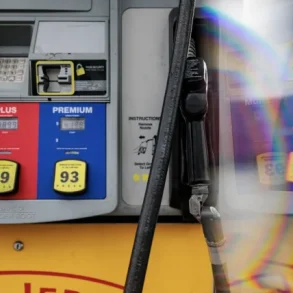
The announcement heightens tensions in the Middle East at a critical moment. About 20 percent of the world’s crude oil and natural gas shipments normally pass through the narrow Strait of Hormuz. When Iran briefly said the strait was open to commercial ships on Friday, oil prices dropped sharply and stock markets rallied. The latest reversal has renewed fears of renewed disruptions to global energy supplies.
Trump Responds to Iran’s Move
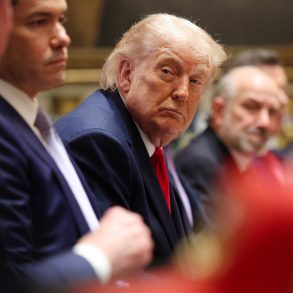
Speaking to reporters on Saturday from the Oval Office, President Donald Trump criticized Iran’s decision, saying the country was trying to be “cute” in its handling of the strait.
“They got a little cute, as they have been doing for 47 years,” Trump said. “Nobody ever took them on. We took them on.”
On Friday evening aboard Air Force One, Trump had hinted that the current ceasefire might not be extended if no agreement is reached. He made clear that the U.S. blockade of Iranian ports would remain in place regardless.
“I don’t know. Maybe I won’t extend it, but the blockade is going to remain,” Trump said. “But maybe I won’t extend it, so you’ll have a blockade and unfortunately we’ll have to start dropping bombs again.”
Despite the tough talk, Trump also expressed optimism that a deal could still be reached, telling reporters, “I think it’s going to happen.”
Trump had just returned from a Turning Point USA “Build the Red Wall” rally in Phoenix, Arizona, where he appeared before heading back to Washington.
Incident in the Strait of Hormuz
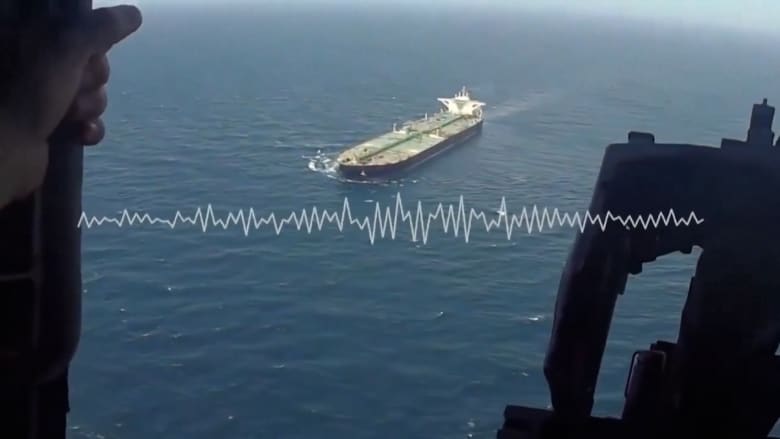
Hours after Iran declared it was reasserting “strict control” over the strait, the United Kingdom Maritime Trade Operations reported that two Iranian Revolutionary Guard Corps (IRGC) gunboats attacked a tanker near the waterway. No injuries were reported in the incident.
The attack came shortly after Iranian officials had reversed their earlier statement that the strait would be reopened. The back-and-forth has created uncertainty for international shipping and energy markets.
Developments in Lebanon Ceasefire
Meanwhile, a separate but related ceasefire between Israel and Hezbollah in Lebanon showed early signs of strain. Just one day into the 10-day truce, French President Emmanuel Macron accused the Iran-backed militant group Hezbollah of killing a French UN peacekeeper in southern Lebanon.
Sergeant-Chef Florian Montorio, an 18-year veteran from the 17th Parachute Engineer Regiment, was killed in a close-range ambush while his team was clearing explosives. Three other French soldiers were injured. Macron demanded that Lebanese authorities arrest those responsible.
Hezbollah denied any involvement in the attack. The French Minister of the Armed Forces praised Montorio as a respected and courageous soldier who left behind a wife and children. The United Nations Interim Force in Lebanon (UNIFIL) condemned the deliberate attack on peacekeepers and confirmed the soldier’s death.
Lebanese Prime Minister Nawaf Salam called the incident damaging to Lebanon’s international reputation and ordered an immediate investigation.
President Trump had strongly supported the Israel-Hezbollah ceasefire, calling it a “historic day” for Lebanon. On Friday, he posted on Truth Social: “Israel will not be bombing Lebanon any longer. They are PROHIBITED from doing so by the U.S.A. Enough is enough!!!”
Trump also urged Hezbollah to behave during the truce, writing earlier: “I hope Hezbollah acts nicely and well during this important period of time. It will be [a] GREAT moment for them if they do. No more killing. Must finally have PEACE!”
Israeli Prime Minister Benjamin Netanyahu welcomed the possibility of broader talks with Lebanon but said Israel would not withdraw from an expanded 10-kilometer-deep security buffer zone in southern Lebanon. He stressed that any long-term agreement would require Hezbollah to disarm.
Despite warnings from Hezbollah, the Lebanese government, and the Israeli military that it was still unsafe, thousands of displaced Lebanese citizens began returning to their homes on Friday. The recent fighting had displaced about 1.2 million people across Lebanon. Israeli forces destroyed more than 40,000 homes in southern Lebanon during the conflict, according to Lebanese officials.
Broader Context
The current tensions stem from a wider regional conflict that escalated after U.S. and Israeli strikes on Iran in late February. Hezbollah began firing rockets into northern Israel in response, leading to Israeli airstrikes and a ground invasion of southern Lebanon.
On the economic front, the U.S. Treasury Department announced on Friday that it would extend a pause on sanctions for Russian oil shipments to help ease global shortages caused by the Iran-related conflict. This decision came just days after Treasury Secretary Scott Bessent had said such a move was off the table.
Pakistani Prime Minister Shehbaz Sharif, who helped mediate the U.S.-Iran ceasefire, welcomed the truce and expressed support for Lebanon’s sovereignty. U.N. Secretary-General António Guterres also urged all parties to respect the ceasefire and work toward a lasting solution.
As the ceasefire deadline approaches, both the situation in the Strait of Hormuz and the fragile truce in Lebanon remain closely watched by world leaders. Any breakdown could quickly escalate into renewed violence and further disrupt global energy markets and regional stability.