
A fragile two-week ceasefire between the United States and Iran, announced on April 7, 2026, is already being tested amid conflicting reports, continued violence, and disputes over its terms.
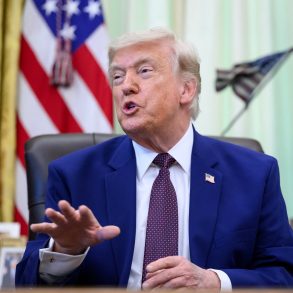
The ceasefire, brokered by Pakistan, came after President Donald Trump delayed planned U.S. strikes on Iran following a 10-point proposal from Tehran. Trump described the proposal as a “workable basis” for negotiations. Both sides have claimed victory: the U.S. and Pentagon officials pointed to major military successes, while Iran credited its resilience for forcing talks.
However, the agreement’s stability is under immediate pressure. On Wednesday, Iranian state media reported that Iran had closed the Strait of Hormuz in response to Israeli airstrikes on Lebanon. White House Press Secretary Karoline Leavitt strongly disputed the claim, saying it was “false” and that public statements from Iran differed from private assurances. She noted an uptick in traffic through the strait and demanded it be reopened “immediately, quickly and safely.” Leavitt added that the U.S. expects the strait to remain open without tolls or limitations. Trump himself suggested the possibility of a U.S.-Iran “joint venture” to secure the critical waterway.
The Strait of Hormuz is a vital route for global oil shipments, and any prolonged closure could disrupt energy markets. Oil prices fell after the ceasefire announcement, but analysts say full restoration of flows could take months, with U.S. gas prices potentially staying elevated for some time.
Disputes Over Lebanon and Ceasefire Scope
A major point of contention is whether the ceasefire applies to Lebanon. Pakistan and Iran say the truce covers the entire region, including Lebanon. However, both the White House and Israel have denied this. President Trump called the fighting in Lebanon a “separate skirmish” not included in the deal. Israeli Prime Minister Benjamin Netanyahu vowed to continue operations against Iran-backed Hezbollah, and on Wednesday Israel launched what it described as its largest attack yet on Hezbollah targets in Beirut, the Bekaa Valley, and southern Lebanon. Lebanon’s Health Ministry reported at least 112 people killed and over 830 wounded in the strikes, including more than a dozen medics.
Iran’s Foreign Minister Seyed Abbas Araghchi insisted the ceasefire terms are “clear and explicit,” saying the U.S. and Israel must stop attacks in Lebanon or risk breaking the agreement.
Despite the truce, violence continued across the region. Iran-aligned militias launched drone attacks near Baghdad’s airport in Iraq, prompting a U.S. embassy security alert. Missile and drone strikes were also reported in Saudi Arabia, Qatar, Kuwait, and other Gulf countries.
Upcoming Talks and U.S. Delegation
The White House announced that Vice President JD Vance will travel to Islamabad, Pakistan, this weekend to lead in-person peace negotiations with Iran. He will be joined by Middle East special envoy Steven Witkoff and Jared Kushner, Trump’s son-in-law. Leavitt expressed optimism about the meetings, saying the U.S. looks forward to direct talks.
President Trump emphasized that negotiations will happen behind “closed doors,” with only one set of “meaningful points” on the table—the same conditions that led to the ceasefire. He warned against outside interference, calling some claims “fraudulent” and saying they would be investigated.
Key issues still in dispute include Iran’s uranium enrichment program and the future of its nuclear activities. Sen. Lindsey Graham (R-South Carolina) voiced support for diplomacy but firmly opposed any deal allowing Iran to continue enriching uranium, stating that all highly enriched uranium must be removed and turned over to the U.S.
Broader Context and Reactions
In just 38 days of conflict, the U.S. military struck more than 13,000 targets in Iran, destroying roughly 80% of its air defense systems, a large portion of its naval fleet, and significant parts of its weapons and nuclear infrastructure, according to Joint Chiefs Chairman Gen. Dan Caine.
Pakistani Prime Minister Shehbaz Sharif urged all parties to respect the two-week ceasefire so diplomacy could take precedence. Meanwhile, the U.S. stock market reacted positively to the news, with the Dow Jones rising more than 1,300 points (nearly 3%) at the open on April 8.
The coming days will be critical in determining whether the ceasefire holds long enough for meaningful negotiations in Pakistan—or whether continued fighting in Lebanon and elsewhere causes the fragile agreement to collapse.
The situation remains fluid, with the Strait of Hormuz, the status of Lebanon, and Iran’s nuclear program all hanging in the balance as Vice President Vance prepares for high-stakes talks.