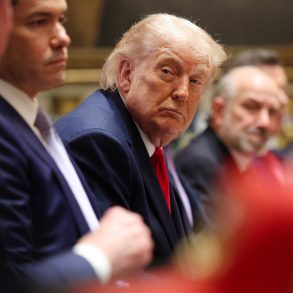
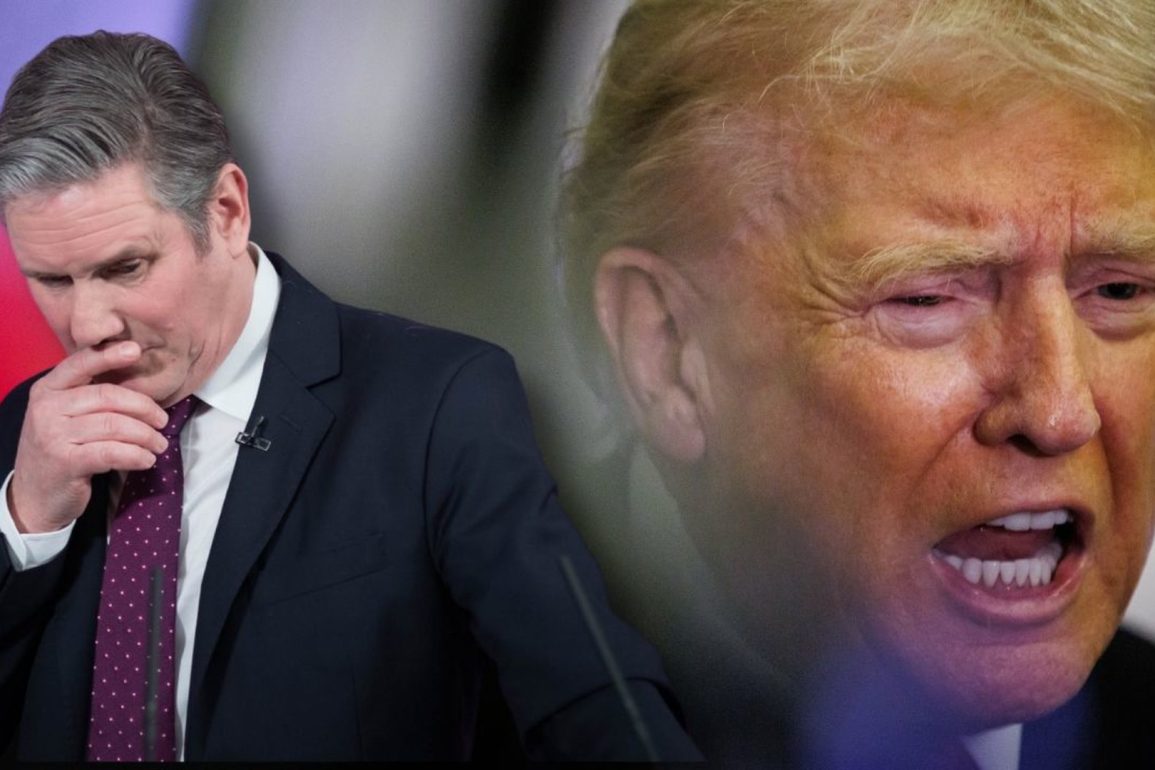
U.S. President Donald Trump sharply criticized European countries on Tuesday for refusing to support the ongoing U.S.-Israeli war against Iran, telling them to “get your own oil” if they are worried about high fuel prices. His comments, posted on Truth Social, have deepened the split between the United States and its traditional allies as the month-long conflict continues to disrupt the global economy.
Trump targeted nations like the United Kingdom and France, which have been reluctant to join the military campaign. He pointed out that countries struggling with jet fuel shortages due to Iran’s actions in the Strait of Hormuz should either buy oil from the United States or “build up some delayed courage” and seize control of the vital waterway themselves. “The hard part is done,” Trump wrote, claiming Iran has been largely weakened. “Go get your own oil!”
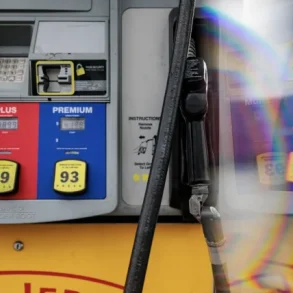
Defense Secretary Pete Hegseth echoed the message, urging other countries to help secure the strait, a narrow passage in the Persian Gulf through which about one-fifth of the world’s oil supply normally flows. Iran’s effective closure of the strait has driven up oil prices worldwide, contributing to higher gas costs even in the United States, where average prices recently topped $4 per gallon for the first time in four years.
Several European governments have openly called the war illegal and have taken concrete steps to limit their involvement. France blocked Israeli planes carrying weapons from flying through its airspace, a move that Trump described as “VERY UNHELPFUL.” French officials said they were surprised by the criticism and insisted their position had remained consistent from the start of the conflict.
Italy recently denied last-minute permission for U.S. bombers to land at a base in Sicily, citing legal requirements for parliamentary approval that were not met in time. Spain has refused to let the United States use its military bases or airspace for operations related to the war. Its defense minister, Margarita Robles, pushed back firmly, saying Spain would not “accept lectures from anyone” and that the country stands with the majority of European public opinion in favoring peace over joining an undefined conflict.
The United Kingdom has allowed the U.S. to use its bases despite its government describing the war as illegal, yet it still drew Trump’s criticism for not doing more.
European leaders have expressed growing frustration with the economic damage. Ireland’s taoiseach, Micheál Martin, called the oil supply shock “probably the worst ever.” Many countries have spent years trying to increase imports of U.S. oil to reduce dependence on the Middle East, but plans to forcibly reopen the Strait of Hormuz are seen by experts as highly risky and unrealistic.
The conflict has already killed more than 3,000 people. On Tuesday, explosions were reported in Saudi Arabia’s capital, Riyadh, and Iran attacked a Kuwaiti oil tanker in the Gulf. U.S. strikes also hit Isfahan, a key city near one of Iran’s main nuclear facilities.
Trump has warned that if no ceasefire is reached soon, the U.S. could expand its attacks to include Iran’s power stations and fresh water plants. Legal experts have warned that such strikes on civilian infrastructure could amount to war crimes.
Meanwhile, Iran’s president, Masoud Pezeshkian, said his country is willing to end the fighting if it receives guarantees that the attacks will not happen again. Negotiations between Washington and Tehran have been described as difficult, with Iran viewing the crisis as an existential threat.
As the war with Iran drags on, Israel has intensified its operations in Lebanon, which it reinvaded earlier this month. Israeli Defense Minister Israel Katz announced plans for a long-term occupation of southern Lebanon up to the Litani River, about 30 kilometers inside Lebanese territory. He said Israeli forces would remain even after fighting with Hezbollah ends, prevent residents from returning to their homes, and demolish certain villages—actions that echo Israel’s operations in Gaza, where it faces accusations of genocide.
While major European powers have not stopped the U.S. and Israeli military actions outright, the recent refusals by Spain, France, and Italy signal a growing willingness among some allies to set limits. Spanish officials emphasized that two countries started the war and cannot expect others to follow without clear goals or international backing.
The transatlantic tensions come at a difficult time. High inflation, slow economic growth, and a cost-of-living crisis are already straining many nations. Trump now faces potential backlash at home over rising gas prices and a conflict that shows no quick end despite U.S. military pressure.
The situation highlights deep divisions over the war’s legality, its objectives, and who should bear the costs of securing global energy supplies. As oil prices climb and the fighting continues, the gap between Washington and many of its European partners appears to be widening.