Tehran’s statement on the key waterway comes as U.S. President Donald Trump claims talks are underway to end the war with Iran.
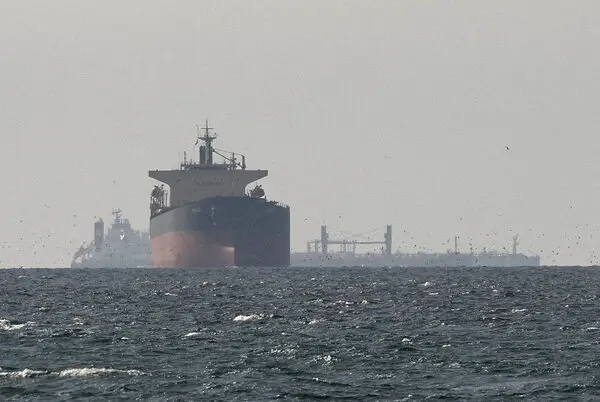
Iran has announced that “non-hostile” ships can safely pass through the Strait of Hormuz, a vital shipping route that has seen traffic collapse since the start of the U.S.-Israel war on Iran. The move comes amid the worst global energy crisis in decades, with oil prices spiking and economies around the world feeling the pain.
In a statement released on Tuesday, Iran’s mission to the United Nations said vessels could use the strait for “safe passage,” as long as they do not take part in or support any attacks against Iran and follow all declared safety rules. Ships must also coordinate with Iranian authorities before crossing. Iran sent a similar message to the International Maritime Organization (IMO), the United Nations agency that oversees global shipping safety.
The Strait of Hormuz is one of the world’s most important chokepoints. Normally, about one-fifth of the planet’s oil and a large share of its liquefied natural gas flow through this narrow waterway between Iran and Oman. Since the conflict began on February 28, however, shipping has dropped sharply. Maritime tracking data showed only five vessels passing through on Monday, compared with an average of around 120 per day before the war.
Iran had warned early in the fighting that any ship trying to pass could be attacked. In recent weeks, though, Iranian officials have said the strait remains open to everyone except “enemies.” The latest statement does not spell out exactly what safety regulations ships must follow or how they should coordinate with Iranian authorities.
The sharp drop in traffic has driven up global energy prices. Oil prices climbed above $100 per barrel for much of March. Some experts warned that if the strait stayed mostly closed, prices could reach $150 or even $200 a barrel. On Wednesday, however, Brent crude—the main international oil benchmark—fell more than 9 percent after reports that the Trump administration had sent Iran a 15-point plan to end the war.
Asian stock markets reacted positively to the news of possible peace talks. Japan’s Nikkei 225 rose about 2.3 percent, South Korea’s KOSPI gained 2.6 percent, and Hong Kong’s Hang Seng Index was up 0.7 percent in early trading.
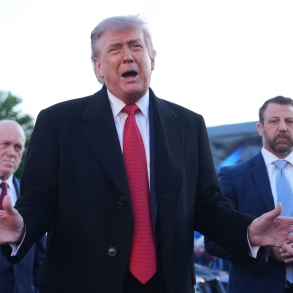
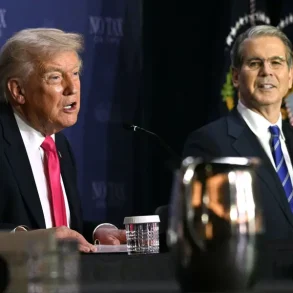
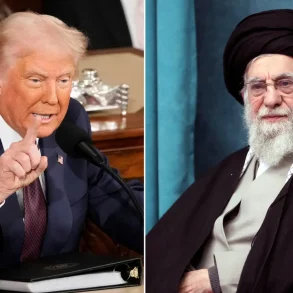
President Trump has repeatedly said that negotiations with Iran are taking place, even though Iranian officials have denied direct talks. The statements about safe passage for non-hostile ships come at a time when both sides appear to be signaling possible ways to ease tensions.
Despite the new announcement, shipping traffic remains far below normal levels. Insurance costs for tankers have soared, and many shipping companies continue to avoid the area. The energy disruption has already affected countries far from the Middle East, raising fuel prices and hurting economies that depend heavily on oil from the Gulf.
The situation in the Strait of Hormuz remains tense, but Iran’s latest message offers a small opening for commercial shipping to resume—if ships meet Tehran’s conditions. Whether this leads to a broader return of traffic or helps pave the way for peace talks will depend on how both sides respond in the coming days.