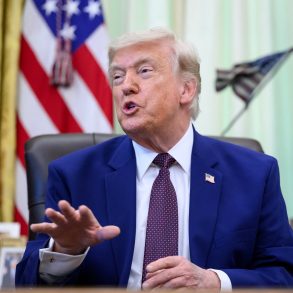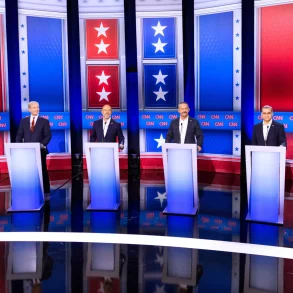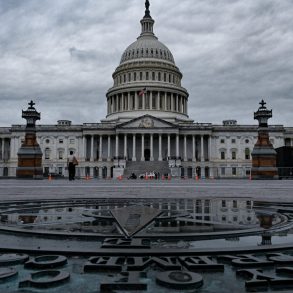

One year after Donald Trump reclaimed the White House, his second term has been a whirlwind of bold reforms, fierce confrontations, and unapologetic assertions of power. From slashing government bureaucracy to reshaping global alliances, Trump’s agenda has reshaped America in ways both supporters hail as revolutionary and critics decry as chaotic. Drawing on key developments from his first 365 days, here are the nine major themes that have defined this period, marked by executive muscle, economic gambles, and a relentless drive to bend institutions to his vision.
1. Slashing the Federal Workforce and Agencies
Trump’s pledge to drain the swamp took a literal turn with aggressive cuts to the federal bureaucracy. Elon Musk, as the public face of the Department of Government Efficiency (DOGE), wielded a “chainsaw” approach, offering buyouts, enforcing layoffs, and closing offices. By November 2025, over 317,000 federal jobs were eliminated, though 68,000 new hires partially offset the losses, per Office of Personnel Management data. Courts reinstated some positions amid legal pushback.
DOGE boasted billions in savings, but CBS News analysis revealed far smaller gains. Non-aligned agencies faced the brunt: the U.S. Agency for International Development was gutted, the Consumer Financial Protection Bureau (CFPB) targeted for near-total staff firings—earning a mocking “RIP CFPB” from Musk on X—and the Education Department eyed for dismantling to shift control to states. The Justice Department’s public corruption unit was eviscerated, while Health and Human Services lost 20,000 jobs, including 1,300 at the National Institutes of Health, plus $2 billion in funding. Vaccine and mental health programs suffered cuts, some later reversed, and the U.S. quit the World Health Organization.
Paradoxically, federal spending rose—December 2025 outlays topped the prior year’s by $5 billion, per Peterson Foundation data—pushing the national debt higher despite the rhetoric of fiscal restraint.
2. Settling Scores with Political Foes, Targeting Rivals—and Rewarding Allies
Vengeance has been a hallmark, with the Justice Department weaponized against Trump’s adversaries. Investigations zeroed in on figures like ex-FBI Director James Comey, New York AG Letitia James, and former aide John Bolton, alongside Democrats Adam Schiff and Eric Swalwell, key players in his first impeachment. Trump denied directing probes but publicly urged them on.
The crackdown extended to six Democratic lawmakers in a viral video urging military resistance to “illegal orders,” prompting Justice Department inquiries and Pentagon moves against Sen. Mark Kelly’s pension. The Federal Reserve drew fire too: Chair Jerome Powell faced subpoenas over headquarters renovations as part of a pressure campaign to slash interest rates, while board member Lisa Cook battles a fraud-based firing set for Supreme Court review.
Dozens of special counsel Jack Smith’s staff were axed, and security clearances revoked for Joe Biden, Kamala Harris, and others. In contrast, Trump’s pardons flowed freely: Jan. 6 rioters, Rep. Henry Cuellar, ex-Rep. George Santos, and even foreign leaders like Honduras’ Juan Orlando Hernandez received clemency on day one or soon after.
3. Carrying Out Mass Deportations and Immigration Enforcement
True to his campaign vow for history’s largest deportation, Trump’s administration deported over 622,000 people by mid-December 2025, plus 1.9 million self-deportations. ICE detention hit a record 73,000, with plans for 100,000 capacity. Border apprehensions plummeted 96% to 6,478 in December.
Deals with nations like Eswatini, Uganda, and Rwanda secured deportation sites, even for non-citizens. In a controversial March move, wartime powers sent hundreds of Venezuelan migrants to El Salvador’s brutal CECOT prison—half without criminal records—later swapped back amid outcry. One erroneous deportee, Kilmar Abrego Garcia, faced fresh U.S. charges upon return.
Urban raids in cities like Chicago and Los Angeles sparked protests and violence, including a fatal ICE shooting in Minneapolis this January. National Guard deployments aided enforcement but triggered lawsuits from states like California, with courts often ruling against Trump—ending most outposts by year’s end, save D.C. Yet in a November “60 Minutes” interview, Trump lamented the efforts “haven’t gone far enough.”
4. Flexing American Power Overseas, Realigning U.S. Foreign Policy
Trump’s foreign policy has been muscular and mercurial, prioritizing U.S. dominance. June’s “Operation Midnight Hammer” struck three Iranian nuclear sites, with fresh threats over Tehran’s protest crackdowns. A Latin American buildup yielded 34 drug-boat strikes in the Caribbean and Pacific, killing over 120.
The boldest stroke: U.S. forces captured Venezuela’s Nicolás Maduro in January 2025, seizing oil assets under a “Donroe Doctrine” emphasizing Western Hemisphere control over European entanglements. This “imperial” pivot alarmed NATO allies, especially Trump’s bid for Greenland—complete with tariff threats and Nobel Prize-fueled disdain for “pure Peace.”
Ukraine peace talks with Putin stalled post-Alaska summit, but a Middle East triumph came in October: a U.S.-brokered Israel-Hamas ceasefire returned all hostages, holding tenuously.
5. Reshaping Economic Policy, Focusing on Trade and a Love for Tariffs
Dubbed the “tariff king,” Trump imposed sweeping duties, reshaping trade but hiking consumer costs—importers, not exporters, foot the bill, economists note. He claims billions in revenue, yet polls show three-quarters of Americans feel inflation outpaces incomes, with mixed jobs data and a climbing stock market.
A U.S.-China trade war peaked with 100%+ tariffs on chips, metals, and soy before an October Xi summit deal eased tensions. Domestically, the “big, beautiful bill” extended first-term tax cuts, offset by Medicaid and food stamp curbs—prioritizing growth over equity.
6. Pushing the Limits of Presidential Power
With GOP congressional majorities, Trump still leaned on executive fiat: 228 orders in 2025-early 2026, shattering records. Emergency powers justified unilateral tariffs, now Supreme Court-bound; military strikes in Iran, Syria, and Venezuela bypassed approval, as did Guard deployments quashed in Chicago.
A record shutdown tested fund-shifting: military pay continued, but threats to pause food stamps and lay off workers sparked suits, underscoring debates over constitutional bounds.
7. Bending Institutions to His Will
Trump has coerced compliance from pillars of society. Law firms defending foes lost contracts and clearances, prompting American Bar Association lawsuits and forced pro bono deals. DEI programs faced federal and private purges, branded “woke” overreach in military, business, and schools.
Universities buckled under threats over protests, tuition policies, or diversity—Columbia settled, others like UPenn negotiated funding salvations. Trump sued media giants too: Disney and Paramount paid $16 million each in defamation pacts over coverage, without admitting fault.
8. Dealmaking with Companies and Countries
Eschewing blanket laws, Trump thrives on bespoke bargains. Tariffs varied by nation; pharma deals slashed prices for Ozempic and Wegovy via direct sales. Tech pacts with Apple, Meta, and OpenAI boosted U.S. manufacturing, echoing pre-term investments.
A TikTok sale to U.S. buyers dodged a ban, pending Beijing’s nod. Nippon Steel’s U.S. Steel buy included a presidential “golden share” for oversight—dealmaking as diplomacy.
9. Putting His Stamp on the White House and Washington, D.C.
Trump’s personal flair extended to monuments: the East Wing fell in October for a $400 million ballroom, funded privately amid ethics questions. Rose Garden patios, gold Oval Office accents, massive flagpoles, and a “Presidential Walk of Fame” (sans Biden, swapped for an autopen) redefined the executive mansion.
Across D.C., an “Independence Arch” loomed via mockups, while the Kennedy Center eyed a “Trump-Kennedy” rebrand and the U.S. Institute of Peace added his name to honor the “greatest dealmaker.”
As Trump’s second year dawns, these themes—fiscal fervor, retaliatory justice, border fortitude, global swagger, tariff tenacity, power plays, institutional arm-twisting, deal-driven diplomacy, and architectural ambition—paint a presidency of disruption and defiance. With courts, allies, and adversaries in tow, the road ahead promises more upheaval.