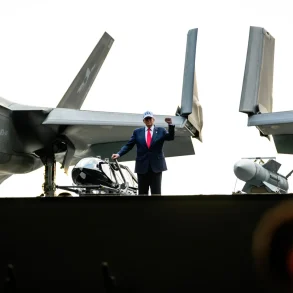

The United States and Israel are engaged in a rapidly escalating war against Iran that began around late February 2026, now entering its second week as of March 6, 2026. The conflict started with coordinated U.S. and Israeli airstrikes targeting Iranian military sites, nuclear facilities, ballistic missile launchers, command centers, and leadership elements. The goal, according to officials, is to severely weaken Iran’s military capabilities, eliminate threats from its proxies like Hezbollah, and potentially force a change in leadership.
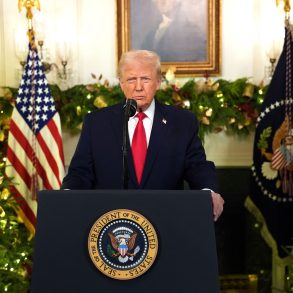
In a phone interview with CNN’s Dana Bash on March 6, 2026, President Donald Trump delivered a tough message about ending the war. He declared there would be no negotiations or agreement unless Iran agrees to “unconditional surrender.” Trump reinforced this stance on his social media platform, Truth Social, posting: “There will be no deal with Iran except UNCONDITIONAL SURRENDER! After that, and the selection of a GREAT & ACCEPTABLE Leader(s), we, and many of our wonderful and very brave allies and partners, will work tirelessly to bring Iran back from the brink of destruction, making it economically bigger, better, and stronger than ever before. IRAN WILL HAVE A GREAT FUTURE. ‘MAKE IRAN GREAT AGAIN (MIGA!).’”
Trump made it clear he is not pushing for Iran to become a full democracy. When Bash asked if he would accept another religious leader running the country, Trump responded, “I may be, yeah.” He added, “I don’t mind religious leaders. I deal with a lot of religious leaders and they are fantastic.” Instead of focusing on democratic reforms, Trump emphasized finding leadership that would “treat the United States and Israel well” and bring “harmony and peace to Iran.” He compared the potential transition to what happened in Venezuela, saying, “It’s gonna work very easily. It’s going to work like it did in Venezuela.” Trump claimed the U.S. has already achieved major military success, stating, “Iran is not the same country it was a week ago. A week ago they were powerful, and now they’ve been indeed neutered.” He also boasted that the U.S. has sunk 25 of Iran’s battleships and crippled much of its naval power.
The military action has been intense and widespread. Israel has conducted multiple waves of airstrikes on Tehran, including what it described as a “broad-scale wave of strikes” targeting regime command centers, ballistic missile systems, air defenses, and other strategic sites. Residents in the capital reported one of the “worst nights” of attacks since the war began, with loud explosions shaking residential areas, thick black smoke rising over the city, and damage to busy shopping streets and other civilian-adjacent locations. In Beirut, Lebanon, Israel struck Hezbollah positions in the southern suburbs, causing panic, fresh explosions, and civilian evacuations. Hezbollah has retaliated by launching missiles toward Israel, despite a prior 2024 ceasefire.
Iran and its allies have fought back with missile and drone attacks on U.S. military bases and assets across the region, including sites in Saudi Arabia, Jordan, the UAE, Kuwait, Qatar, and Bahrain. Satellite images reveal significant damage to key U.S. air defense radar systems—some protecting THAAD missile interceptors—near Prince Sultan Air Base in Saudi Arabia and other locations. These radars, each costing hundreds of millions of dollars, form the core of defenses against incoming ballistic missiles. The U.S. has also struck Iranian naval vessels at sea, such as a drone carrier set ablaze, and used heavy bunker-buster bombs on deeply buried missile sites.
The war has disrupted global energy markets. The Strait of Hormuz, a critical chokepoint for oil shipments, faces ongoing threats, driving up gas prices worldwide, including in the U.S. Trump said he is not worried about soaring prices. Major shipping companies have halted cargo deliveries to the Persian Gulf due to safety risks.
Adding complexity, reports indicate Russia is aiding Iran by sharing intelligence, including satellite imagery, on U.S. troop, ship, and aircraft movements. This marks Moscow’s first direct involvement in supporting Tehran during the conflict.
Casualties continue to mount, with reports of over 1,300 deaths in Iran alone from the strikes, alongside civilian harm in Lebanon and other areas. The situation remains highly volatile, with no immediate signs of de-escalation and warnings of possible further escalation, including potential ground operations. Trump has signaled the U.S. and its allies are prepared to continue until their demands are met.