

Six U.S. soldiers were killed in an Iranian drone strike on a makeshift operations center located in the civilian Port Shuaiba in Kuwait, marking some of the first American casualties in the ongoing conflict with Iran.
The attack occurred on Sunday, March 1, 2026, when an Iranian drone struck the facility, which was described as a shipping container-style building with limited defenses. Satellite images reviewed by news outlets showed the main structure destroyed, with smoke rising from the site. The port is a busy commercial area south of Kuwait City, surrounded by oil storage tanks, refineries, and a power plant, and more than 10 miles from the main U.S. Army base, Camp Arifjan.
The soldiers, part of a supply and logistics unit from an Army Reserve group based in Iowa, had relocated to the port just a week earlier. According to Joey Amor, the husband of one of the victims, Sgt. 1st Class Nicole Amor, the move was intended to disperse troops into smaller groups for safety amid fears of an attack on the main base.
“They were dispersing because they were in fear that the base they were on was going to get attacked, and they felt it was safer in smaller groups in separated places,” Joey Amor told the Associated Press.
Sgt. 1st Class Nicole Amor, 39, from White Bear Lake, Minnesota, was a mother of two and reportedly just days away from returning home when the strike occurred. Her husband noted that she was almost finished with her deployment.
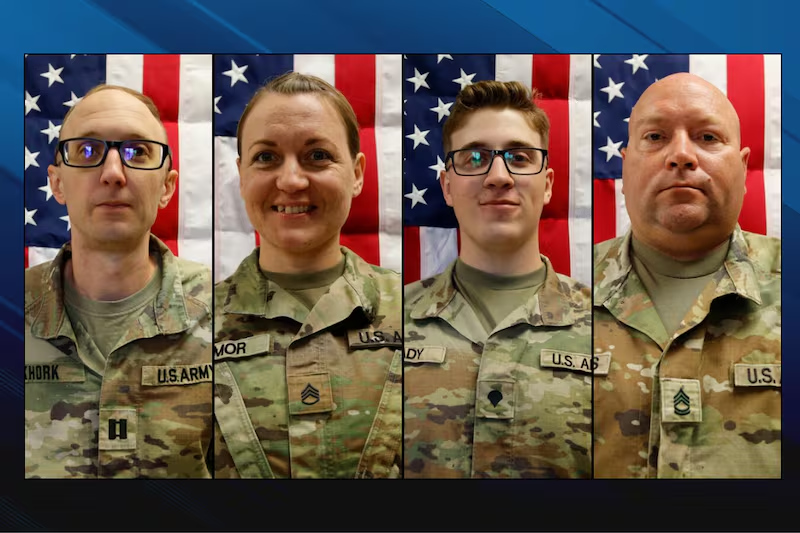
The Pentagon has identified four of the six soldiers killed:
- Capt. Cody Khork, 35, of Lakeland (or Winter Haven), Florida
- Sgt. 1st Class Noah Tietjens, 42, of Bellevue, Nebraska
- Sgt. 1st Class Nicole Amor, 39, of White Bear Lake, Minnesota
- Sgt. Declan Coady, 20, of Des Moines (or West Des Moines), Iowa
Sgt. Coady, one of the youngest, had been recommended for promotion from specialist to sergeant and received the rank posthumously. He was studying cybersecurity at Drake University and training to become an IT specialist in the Army Reserves. His father, Andrew Coady, described him as “very good at what he did.”
The names of the other two soldiers have not been released.
The strike happened as the U.S. and Israel conducted attacks on Iran, prompting Iranian retaliatory strikes across the region, including in Kuwait. Defense Secretary Pete Hegseth described the incident as a projectile that penetrated air defenses, hitting a “tactical operations center.” He emphasized that the U.S. maintains strong air dominance and that more casualties are likely in the conflict.
“The U.S. will continue leading the most lethal and precise air power campaign in history against Iran,” Hegseth said. “No stupid rules of engagement… We fight to win, and we don’t waste time or lives. As the President warned, an effort of this scope will include casualties. War is hell and always will be.”
Pentagon spokesman Sean Parnell stated on social media that the facility was a “secure” site fortified with 6-foot walls and protected under a broad U.S. air defense umbrella in the Middle East. However, questions remain about the specific defenses at the port location and why the drone was able to reach its target without apparent warning or sirens, according to some reports.
U.S. Central Command and Pentagon officials have said it is inappropriate to comment further while the incident is under investigation.
President Donald Trump and defense leaders have warned that additional American losses are expected as the conflict continues. The deaths highlight the risks to U.S. forces in dispersed locations amid escalating regional tensions.