


The United States has renewed its warnings of potential military action against Iran, even as indirect nuclear talks continue and Tehran teams up with Russia for joint naval exercises in the Sea of Oman.
Tensions in the region remain high following a second round of negotiations between U.S. and Iranian officials in Geneva, Switzerland, on February 17, 2026. The talks, which were indirect and mediated in part by Oman, produced some limited progress but left major gaps unresolved. Iran’s Foreign Minister Abbas Araghchi described the discussions as “constructive,” noting that both sides agreed on “guiding principles” for a possible future deal on Iran’s nuclear program. However, U.S. officials, including Vice President JD Vance, emphasized that Iran has not yet accepted Washington’s key demands, or “red lines,” particularly on halting uranium enrichment inside Iran and addressing its ballistic missile capabilities.
White House Press Secretary Karoline Leavitt reinforced the administration’s stance on February 18, stating that Iran “would be very wise to make a deal” with President Donald Trump. She acknowledged “a little bit of progress” from the Geneva meeting but stressed that the two sides remain “very far apart on some issues.” Leavitt described diplomacy as the president’s preferred path but did not rule out other options, referencing past U.S. strikes on Iranian nuclear facilities in June 2025.
President Trump has escalated the rhetoric through social media and public statements, warning that failure to reach an agreement could force the U.S. to take stronger measures. He has referenced the possibility of using bases in the region, including in the Chagos Islands, to counter what he calls a “highly unstable and dangerous regime.” Reports from multiple outlets indicate the U.S. military is preparing for potential strikes, with some sources suggesting readiness as early as this weekend, though others point to a fuller deployment by mid-March. Trump has not made a final decision, and discussions with advisers continue.
To back up its warnings, the U.S. has significantly increased its military presence near Iran. The USS Abraham Lincoln carrier strike group, including dozens of fighter jets, is positioned in the Arabian Sea, roughly 700 kilometers (about 435 miles) from Iran’s coast. A second carrier, the USS Gerald R. Ford—the world’s largest warship—is en route from the Atlantic and expected to join soon, along with additional fighter jets, refueling tankers, and support ships. This buildup follows earlier U.S. involvement in strikes on Iranian sites at Fordow, Natanz, and Isfahan last year, which came amid a brief war sparked by Israeli attacks.
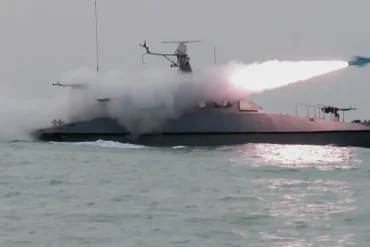
Iran has responded with its own displays of strength. The Islamic Revolutionary Guard Corps (IRGC) conducted war games in the Strait of Hormuz earlier this week to prepare for potential threats. On February 18, Iranian officials announced joint naval drills with Russia set for February 19 in the Sea of Oman and northern Indian Ocean. Rear Admiral Hassan Maqsoudlou described the exercises as promoting “peace and friendship” among regional countries while enhancing coordination to protect maritime security, including against threats to commercial shipping and oil tankers. The drills aim to deter “unilateral action” in the area.
Russian Foreign Minister Sergey Lavrov added to the warnings, telling Saudi Arabia’s Al-Arabiya that any new U.S. strike on Iran would carry “serious consequences” and risk a nuclear incident, given past attacks on monitored sites. He urged restraint to allow Iran a peaceful nuclear program and noted that escalation could harm recent improvements in Iran’s ties with neighbors like Saudi Arabia.
Iran’s Supreme Leader Ayatollah Ali Khamenei has maintained a defiant tone, posting an AI-generated image of the USS Gerald R. Ford at the ocean floor with a caption highlighting weapons capable of sinking such ships. Iran insists its nuclear activities are peaceful and demands sanctions relief in exchange for any limits, while rejecting zero enrichment or discussions on missiles.
Experts express concern over the fragile situation. Barbara Slavin of the Stimson Center noted the lack of a clear basis for agreement so far, given the short duration of talks and the ongoing military buildup. She warned of the risks of further attacks by the U.S. or Israel and the potential for wider involvement.
As diplomacy hangs in the balance, with Iran expected to submit a written proposal soon, the region watches closely for signs of de-escalation—or escalation. Gulf states like Oman, Qatar, and Saudi Arabia continue efforts to prevent a broader conflict that could disrupt global oil supplies through key routes like the Strait of Hormuz.


