

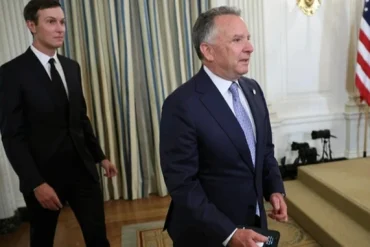
On February 17, 2026, Geneva, Switzerland, served as the focal point for a packed day of U.S.-led international negotiations addressing two of the world’s most pressing crises: Iran’s nuclear program and Russia’s war in Ukraine. The United States sent the same high-level team—special envoy Steve Witkoff and Jared Kushner, President Donald Trump’s son-in-law—to manage both sets of talks in a demanding, back-to-back schedule.
U.S.-Iran Nuclear Negotiations Show Modest Progress
The morning session featured indirect talks with Iran, mediated by Oman, marking the second round since discussions began earlier in the month. Both delegations described the Geneva meeting as serious and constructive. Iran’s Foreign Minister Abbas Araghchi stated that the sides had agreed on “guiding principles” to shape future negotiations and committed to exchanging draft texts of a potential agreement before the next round. He characterized the talks as more substantial than the previous session in Oman, while cautioning that detailed drafting would prove difficult and a final deal would not happen quickly.
U.S. officials confirmed that progress had been achieved but emphasized that significant differences remained. They anticipate receiving detailed Iranian proposals within the next two weeks to help close remaining gaps. The United States continues to seek the complete dismantlement of Iran’s nuclear program, restrictions on its ballistic missiles, and curbs on support for regional proxies such as Hezbollah and Hamas. Iran, however, has maintained that discussions should focus solely on nuclear issues, rejecting any inclusion of missiles or regional alliances, while demanding full sanctions relief and preserving its right to enrich uranium for civilian purposes.
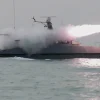
The talks unfolded amid rising regional tension. Iran temporarily closed sections of the Strait of Hormuz for Islamic Revolutionary Guard Corps naval exercises, which included simulations of attacks and tanker seizures to showcase control over this critical global oil chokepoint. At the same time, the United States continued to reinforce its air and naval presence in the Middle East. Iran’s Supreme Leader Ayatollah Ali Khamenei delivered a defiant message, asserting that even the world’s strongest military could be decisively “slapped” and claiming Iran possesses weapons capable of sinking U.S. aircraft carriers.
Ukraine-Russia Talks Center on Practical Steps
In the afternoon, the U.S. team shifted focus to trilateral negotiations with Russia and Ukraine at the InterContinental hotel. Kyiv’s chief negotiator, Rustem Umerov, reported that the first day concentrated on “practical issues and mechanisms of possible solutions,” and he thanked the American mediators for their constructive engagement. Discussions were scheduled to resume the following day.
Russian state media described the atmosphere as “very tense.” The delegations featured senior figures: Vladimir Medinsky leading for Russia, and Rustem Umerov joined by Ukrainian officials including Kyrylo Budanov and Andriy Hnatov for Ukraine. Protesters gathered outside the venue in support of Ukraine, displaying flags and signs calling for an end to the war.
The Geneva talks occurred against the backdrop of continued fighting in Ukraine. Russian forces launched attacks on multiple regions hours before the negotiations began, causing civilian injuries and infrastructure damage. In Kyiv, more than 1,000 residential buildings still lacked heating due to earlier strikes on a nearby power plant, leaving residents to cope with freezing temperatures around 16°F (-9°C).
Domestic Context in Washington
While diplomacy unfolded overseas, the United States faced ongoing domestic challenges. A partial shutdown of the Department of Homeland Security persisted due to a deadlock over immigration enforcement reforms. The White House rejected the latest Democratic counteroffer, with officials stating that the two sides remained “pretty far apart.” President Trump, whose public schedule included private meetings, has continued to stress the need to enforce federal immigration laws.
The day’s events underscored the Trump administration’s strategy of deploying trusted envoys to tackle multiple high-stakes issues simultaneously while maintaining military leverage. Although limited headway was reported in both sets of talks, substantial obstacles remain, and the coming weeks will determine whether diplomacy can produce meaningful agreements or if tensions will continue to escalate.


