

Across the United States, students are still struggling to recover from learning losses caused by the COVID-19 pandemic. On average, young people remain about half a grade level behind pre-pandemic achievement in both reading and math, according to the Education Recovery Scorecard. While some school districts are making real progress, the overall picture points to a troubling “reading recession” that began even before the pandemic hit.
Researchers from Harvard, Stanford, and Dartmouth examined test scores from third through eighth grade across more than 5,000 school districts in 38 states. Their findings are sobering. From 2022 to 2025, only five states plus the District of Columbia saw meaningful growth in reading scores. Nationally, reading achievement has been sliding for years—eighth-grade scores have fallen since 2013 and fourth-grade scores since 2015, according to the National Assessment of Educational Progress.
Harvard professor Thomas Kane described the pandemic as “the mudslide that had followed seven years of steady erosion in achievement.” Factors such as increased smartphone and social media use, along with less recreational reading, may have played a role. Some states also reduced pressure on schools to improve test results.
Bright spots show what works
Despite the national downturn, certain districts and states are moving forward. In Modesto, California, sixth-grade teacher Nancy Barajas prepares her students for tests by dimming the lights, turning on a disco ball, and letting them dance to music as a “pre-celebration.” The energy seems to help. Modesto has seen steady gains in both reading and math after revamping instruction during and after the pandemic.
The district trained teachers in the “science of reading,” a phonics-based approach backed by decades of research on how children actually learn to read. Schools paid educators extra to complete intensive training programs and created new support systems for English learners. As a result, students gained the equivalent of 13 extra weeks of learning in reading and 18 weeks in math.
Similar success stories are appearing elsewhere. In Detroit, schools have combined stronger reading instruction with a serious push to improve attendance. At Munger Elementary-Middle School, attendance agents call homes and sometimes visit families of absent students. First-grade teacher Samantha Ciaffone noted that daily attendance has improved dramatically, allowing teachers to be far more effective. “It allows us to be better educators to see kids consistently in the seat instead of once or twice a week,” she said.
Southern states lead reforms
Some Southern states have stood out for their aggressive education reforms. Louisiana, Maryland, Tennessee, Kentucky, and Indiana improved reading scores by requiring phonics-based “science of reading” instruction, screening for learning disabilities like dyslexia, and training teachers with reading coaches.
Alabama has shown especially strong gains. The state passed laws requiring phonics instruction and later created a similar structured approach for math. In Birmingham, schools like Oxmoor Valley Elementary have hired math specialists and focused on high expectations. Superintendent Mark Sullivan emphasized balancing support with accountability.
Not every state that adopted new reading methods saw success, however. Florida, Arizona, and Nebraska made changes but still experienced falling scores, showing that reform takes time and consistent effort.
Reasons for hope
Experts point out that the United States has improved education before. From the 1990s until the mid-2010s, test scores rose steadily, graduation rates increased, and gaps between different groups of students narrowed. Stanford professor Sean Reardon believes this history proves progress is possible again.
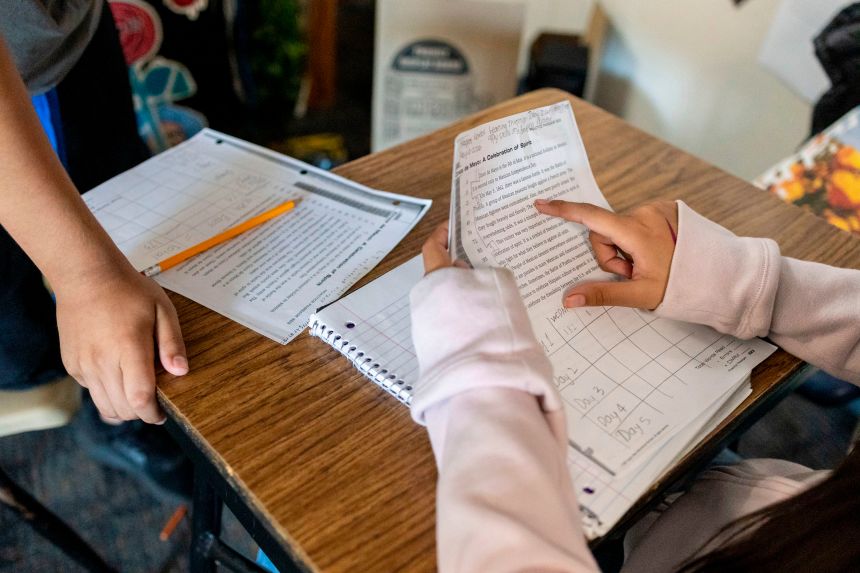
In classrooms like Nancy Barajas’ in Modesto, students are already showing what focused practice can achieve. They read passages together, give each other feedback, and build fluency every day. One boy described the growing confidence: “Eventually, you get through the word like it’s water. You just say it smooth.”
While challenges remain and many students are still performing below grade level, these success stories demonstrate that targeted reforms—especially in reading instruction and student attendance—can help reverse the reading recession. With continued effort, more districts may be able to bring students back to where they need to be.