

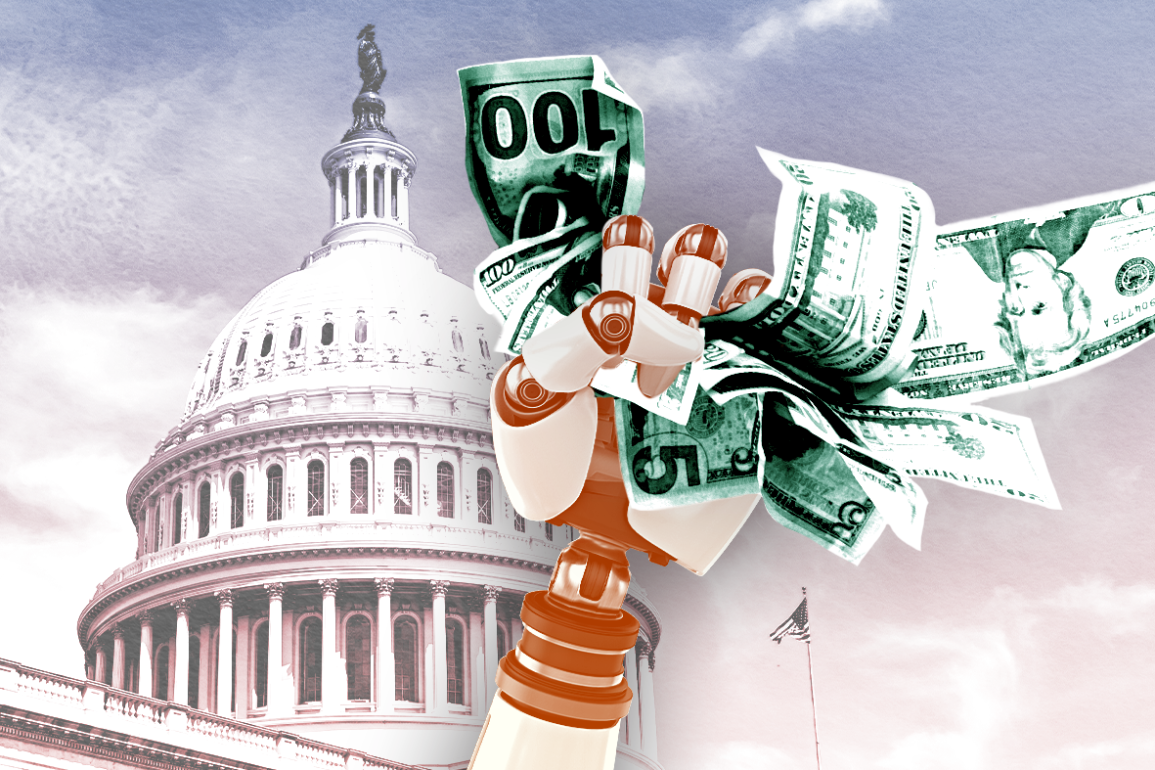
The rise of artificial intelligence (A.I.) is changing many parts of life, from jobs to daily routines, and now it’s starting to reshape American politics. As the 2026 midterm elections approach, A.I. companies and their leaders are pouring money into campaigns, creating new debates and divisions.
In a recent interview with The New York Times political reporter Katie Glueck, tech columnist Kevin Roose explained how A.I. is becoming a major force in politics. Roose, who co-hosts the podcast Hard Fork, described three main groups, or “camps,” in the debate over A.I.
The first group is the A.I. accelerationists. They want companies to develop A.I. as quickly as possible with little government interference. This view aligns with the Trump administration’s approach. Leaders from companies like OpenAI are supporting this side. For example, OpenAI president Greg Brockman and others back a super PAC called Leading the Future, which has raised more than $100 million to spend on the midterms. This group pushes for fewer rules on A.I. developers and faster building of data centers.
The second group is more cautious. They worry about risks such as selling advanced A.I. chips to China, deepfake videos that spread false information, A.I. companions aimed at children, and the growing power of A.I. systems. Anthropic, a leading A.I. company focused on safety, recently put $20 million into a super PAC to push back against the accelerationists’ efforts.
The third group takes a populist stance against A.I. They fear widespread job losses from automation and see A.I. as another way big tech invades everyday life. This camp opposes new data centers and uses arguments similar to those against social media companies.
These divisions don’t follow traditional left-right lines perfectly. Some conservatives, like Steve Bannon, express concerns about A.I. risks. China hawks on the right want stricter controls on tech exports. On the left, figures like Bernie Sanders oppose data center construction. This could lead to unexpected alliances across party lines.
Roose predicts the biggest fights in the 2026 midterms—and possibly into the 2028 presidential race—will center on data centers and job displacement.
Data centers are huge buildings packed with computers that run A.I. systems. The largest ones are like small towns and cost hundreds of billions of dollars to build. They consume massive amounts of electricity, causing higher bills and strain on local power grids. Many communities resist them because they don’t want the facilities in their neighborhoods—they’re a clear sign of the A.I. boom that not everyone welcomes.
On jobs, A.I. isn’t causing mass unemployment yet, according to economic data. But as tools improve and handle more entry-level white-collar tasks, resistance could grow. Workers might push back against A.I. replacing human roles in offices.
Few national politicians have handled A.I. issues with real skill so far. Roose points to New York Democratic state assemblyman Alex Bores, who’s running for Congress and supports A.I. regulation. His race has become a test: Leading the Future is running attack ads against him, while an Anthropic-linked group runs supportive ones.
The accelerationists want the U.S. to “lead” in A.I., which means easing restrictions, speeding up data center permits, and possibly a federal rule that blocks states from passing tougher regulations than the national level for several years.
The more concerned side wants greater oversight and transparency into how A.I. is developed.
Roose compares A.I.’s growing political influence to cryptocurrency’s rise. A few years ago, crypto had little sway in Washington. Then money flowed in, creating a strong lobbying presence with little pushback. A.I. is even bigger, already affecting jobs, schools, and daily life. Many Americans feel anxious about these changes, creating energy that political groups will try to tap.
In the end, the core question is who controls A.I. and whose interests it serves. Roose notes that tech insiders in San Francisco worry more about the future—if A.I. becomes smarter than humans and acts on its own, the political debates will become far stranger than today’s arguments over data centers.
As the 2026 midterms near, A.I. is no longer just a tech story—it’s a political one, with big money and real stakes for the country’s future.