US senators from both major parties have introduced bipartisan legislation to block any US military or funded efforts to occupy or annex territories belonging to NATO member states, including Greenland, amid renewed interest from President Donald Trump in acquiring the Arctic island.
The bill, known as the NATO Unity Protection Act, was introduced on January 13, 2026, by Democratic Senator Jeanne Shaheen (ranking member of the Senate Foreign Relations Committee) and Republican Senator Lisa Murkowski. It prohibits the use of funds from the Department of Defense (Pentagon) or the Department of State to blockade, occupy, annex, conduct military operations against, or otherwise assert control over the sovereign territory of any NATO member without that country’s consent or approval from NATO’s North Atlantic Council.
Shaheen emphasized that such actions would undermine the alliance: “Any suggestion that the United States might use its power to seize or control the territory of a NATO ally would directly undermine the alliance that keeps Americans safe and plays into the hands of our adversaries.” She added that the bill sends a clear message of bipartisan opposition to recent rhetoric about Greenland, which she said harms US national security interests.
Murkowski highlighted NATO’s role as a key defense against global threats: “Our NATO alliances are what set the United States apart from our adversaries. The mere notion that America would use our vast resources against our allies is deeply troubling and must be wholly rejected by Congress in statute.”
A similar measure, the No Funds for NATO Invasion Act, was introduced in the House of Representatives by a bipartisan group including Democrat Bill Keating and others, aiming to achieve the same restrictions on funding for actions against NATO territories.
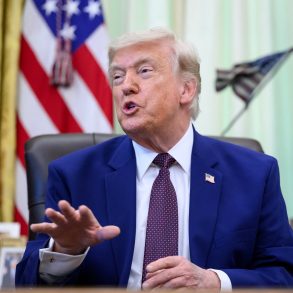
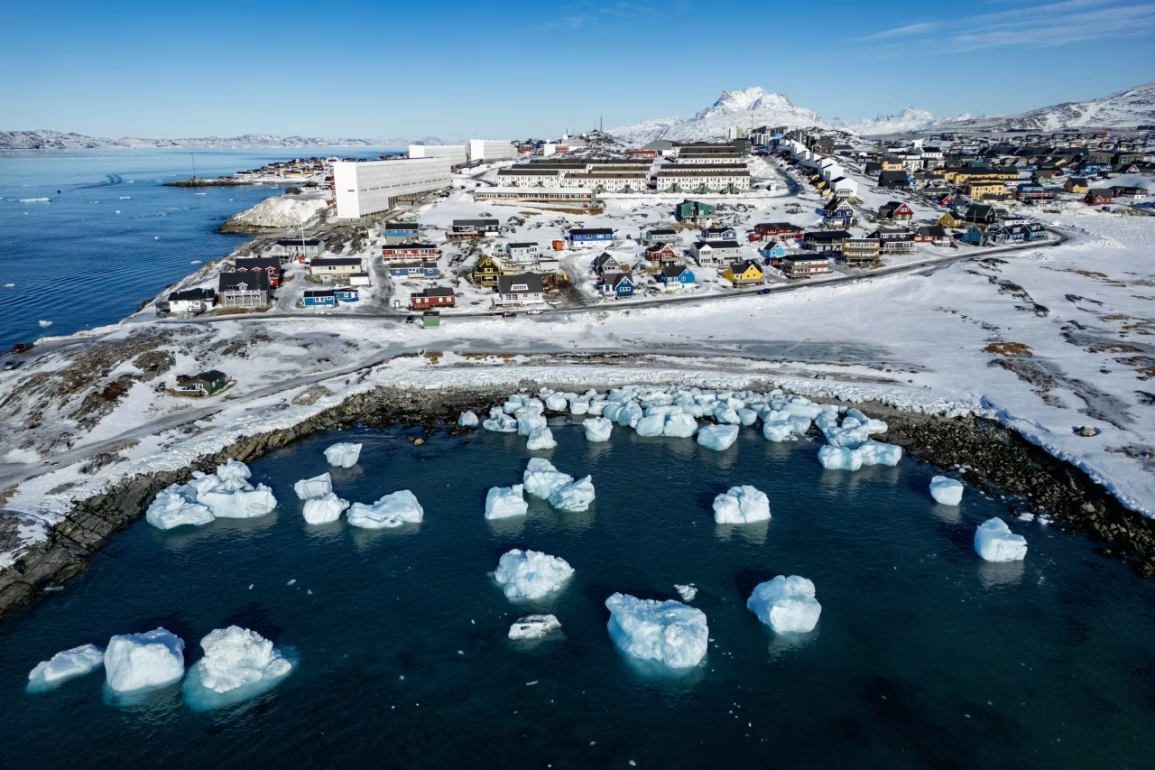
The legislation responds to President Trump’s repeated statements expressing strong interest in acquiring Greenland, a self-governing territory of Denmark (a NATO ally). Trump has described control of the island as an “absolute necessity” for US national security and economic reasons, citing its strategic Arctic location and vast mineral resources, including rare earth elements. He has argued that without US control, Russia or China could dominate the area.
In recent comments, Trump stated the US would acquire Greenland “one way or the other,” suggesting he prefers a deal but would not rule out other means. The White House has confirmed discussions of various options, including potential military involvement, though some administration officials have downplayed immediate force plans.
Greenland’s Prime Minister Jens-Frederik Nielsen firmly rejected the idea, stating at a joint news conference with Danish leaders: “If we have to choose between the United States and Denmark here and now, we choose Denmark. We choose NATO, the Kingdom of Denmark and the European Union.” Polling shows overwhelming opposition among Greenland’s roughly 57,000 residents to joining the US, with about 85% against it in recent surveys.
Danish Prime Minister Mette Frederiksen and other European leaders have warned that any forceful US move against Greenland could threaten NATO’s existence, as the alliance’s core principle (Article 5) treats an attack on one member as an attack on all. Danish officials have engaged in diplomacy, including meetings with US lawmakers and upcoming talks involving Secretary of State Marco Rubio and Vice President JD Vance.
Some Republican leaders, like House Speaker Mike Johnson, have sought to minimize concerns, stating no war is pending and military action against Greenland is “just not a thing.” Experts note that while Congress holds the power to declare war and control funding, enforcing limits on a president can be challenging without strong political unity.
The bills aim to place clear legal guardrails on executive actions, reaffirming NATO’s importance and respect for allies’ sovereignty. Supporters hope broad bipartisan backing will deter any unilateral moves and preserve the transatlantic alliance.