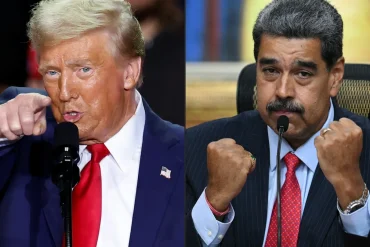
In late December 2025, President Donald Trump publicly revealed that the United States had conducted its first known strike on Venezuelan soil—a CIA-led drone attack on a coastal dock facility suspected of being used for drug trafficking. This announcement, made casually in interviews and public remarks, marked a significant escalation in the Trump administration’s ongoing pressure campaign against Venezuelan President Nicolás Maduro. While the U.S. government has not officially confirmed the operation, multiple news outlets, including CNN and The New York Times, reported that the strike targeted a remote dock linked to the Venezuelan gang Tren de Aragua, which the administration has designated as a foreign terrorist organization.
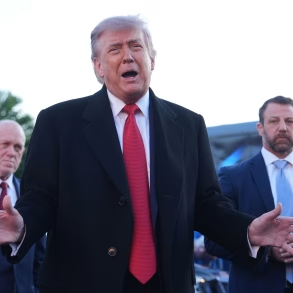
Trump first hinted at the strike during a December 26 radio interview on WABC, describing how the U.S. had “knocked out” a “big facility where the ships come from.” Days later, on December 29 at Mar-a-Lago while meeting with Israeli Prime Minister Benjamin Netanyahu, he provided more details: “We hit all the boats, and now we hit the implementation area… There was a major explosion in the dock area where they load the boats up with drugs.” Sources briefed on the operation told reporters that no one was killed, as the dock was empty at the time, and the attack was carried out using a drone, likely an MQ-9 Reaper.
This land-based strike follows months of U.S. military actions in international waters, where American forces have destroyed dozens of boats suspected of smuggling drugs, killing over 100 people in some reports. The administration has also seized oil tankers linked to Venezuela and shared dramatic videos of these operations on social media. The dock strike represents a shift from maritime targets to infrastructure inside Venezuela, raising questions about the risks of further escalation.
Experts and retired intelligence officials describe Trump’s public disclosures as highly unusual. Covert operations, especially those run by the CIA, are designed to maintain “plausible deniability”—meaning the U.S. can avoid admitting involvement if exposed. Presidents rarely acknowledge them openly. Former CIA Latin America station chief Rick de la Torre called it “shadows and mirrors,” suggesting the announcements are part of a psychological strategy to signal to Maduro that the U.S. can strike at will and has his regime surrounded. Another retired official, Christopher Costa, who served in Trump’s first term, said it reinforces the message: “It’s time to step down.”
The broader goal appears to be forcing Maduro from power while disrupting alleged drug networks. The Trump administration has accused Maduro’s government of ties to narcoterrorism, designating Tren de Aragua—a gang originating in Venezuelan prisons—as a terrorist group earlier in 2025. U.S. officials claim the dock was used by the gang to store and load narcotics onto boats headed north. However, some intelligence assessments have found limited evidence of direct government control over the gang, and Venezuela plays a relatively minor role in global drug routes compared to other countries.
Trump’s approach blends diplomacy, overt military pressure, and covert action—what one expert called the “third option” in the president’s toolkit. In October 2025, Trump had already confirmed authorizing CIA operations in Venezuela, another rare public admission. By revealing details of the drone strike, he may be aiming to deter Maduro’s allies, rally domestic support for his anti-drug campaign, and demonstrate strength without full-scale war.
Critics worry about the implications. Without congressional oversight for covert actions beyond intelligence committees, and with no official confirmation from the CIA, Pentagon, or White House, the operations blur lines between counter-narcotics efforts and regime change. Venezuela has denounced the actions as aggression, and regional leaders have expressed concern over potential spillover.
As 2025 ends, Trump’s Venezuela policy remains aggressive and unpredictable. The dock strike underscores a willingness to push boundaries, using secrecy, publicity, and force to challenge Maduro. Whether this leads to negotiations, further strikes, or broader conflict remains uncertain, but it highlights a return to bold U.S. interventionism in Latin America.