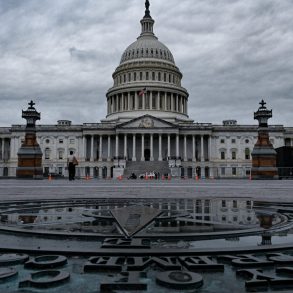


As the 2026 midterm elections draw near, the fight over congressional district lines remains intense and unresolved in several key states. Normally, redistricting occurs every decade following the census to reflect population changes. However, this cycle has seen an unprecedented mid-decade scramble, sparked by former President Donald Trump’s call for Republican-led states to redraw maps and bolster their slim House majority. In 2025, six states implemented new maps, potentially shifting up to nine seats toward Republicans and six toward Democrats. Yet, the battle is far from over. At least two major states—Virginia and Florida—are poised to pursue fresh redistricting efforts in 2026, while a pivotal Supreme Court decision could unleash even more changes, potentially favoring Republicans in the South. This ongoing “redistricting crisis,” as described by John Bisognano of the National Democratic Redistricting Committee, could tip the balance of power in Congress.
A Recap of the 2025 Redistricting Frenzy
The year 2025 marked a chaotic chapter in American electoral politics. Trump urged GOP-controlled legislatures to act swiftly, leading to new maps in Texas, Missouri, and North Carolina that could net Republicans as many as seven seats by reshaping districts to favor their party. Texas’s map, in particular, drew controversy; a lower court found it likely involved racial gerrymandering, but the Supreme Court allowed it to proceed, potentially adding five GOP seats alone.
Democrats fought back. In California, voters approved a new map that could flip up to five Republican-held seats, effectively offsetting Texas’s gains. Ohio saw a bipartisan compromise on a court-mandated redo, yielding only one or two extra seats for Republicans—less than the party had hoped. Utah’s court-ordered map created a new Democratic-leaning district. Meanwhile, Indiana delivered a significant blow to national Republicans when lawmakers rejected a proposed map that aimed to add two GOP seats, despite intense pressure from Trump and his allies.
Overall, Republicans emerged with a slight edge, but not the dominant advantage they initially sought. The House currently stands at 220 Republican seats to 213 Democratic ones, and historical trends suggest the president’s party often loses ground in midterms. With so much still in flux—including court challenges and legislative votes—the net shift could range from 12 to 14 seats for Republicans, countered by about nine for Democrats.
Key Battlegrounds in 2026
Looking ahead, redistricting efforts will likely focus on a handful of states where political control and legal hurdles allow for action. Republicans hold an advantage here, as they control more state legislatures nationwide, and many Democratic states have safeguards against partisan gerrymandering, such as independent commissions.
Virginia: Democrats are aggressively pursuing a new map in this blue-leaning state. In a bold move, the Democratic-controlled legislature passed a constitutional amendment in October 2025 to bypass the bipartisan redistricting commission established just five years ago. The amendment, which permits mid-cycle redistricting if other states do the same, must pass again in 2026—now with an even stronger Democratic majority following November’s elections—before going to voters. If successful, Democrats could target up to four Republican seats, potentially shifting the state’s 6-5 Democratic edge to something like 10-1. Gov.-elect Abigail Spanberger’s strong performance, carrying eight of 11 districts, underscores this potential. Lawmakers face a tight timeline, with the primary filing deadline on April 2, though it could be adjusted.
Florida: On the Republican side, the GOP-dominated legislature is expected to push forward, aiming to convert three to five of the state’s 28 districts—currently 20 Republican—to their favor. A committee hearing in December 2025 kick-started the process, but challenges loom. The state constitution prohibits partisan gerrymandering, and Gov. Ron DeSantis prefers waiting for the Supreme Court’s Voting Rights Act (VRA) ruling to ease restrictions. Infighting between DeSantis and legislators adds complexity, but a late-April filing deadline and August primary provide some flexibility.
Kansas: Republican leaders plan to revisit redistricting in January 2026, after failing earlier in the year. They control the legislature but need a two-thirds majority to override a veto from Democratic Gov. Laura Kelly. With only one Democratic district to target, gains would be modest. Kelly has expressed skepticism, noting little shift in legislative support.
Maryland and Illinois: Democrats have eyed these states, but progress is slow. In Maryland, Gov. Wes Moore created a redistricting commission in November 2025, which recently voted to advance. The goal: flipping the state’s sole Republican seat, held by Rep. Andy Harris. However, Senate President Bill Ferguson has resisted, arguing it undermines democracy. In Illinois, where Democrats already hold 14 of 17 seats, Black lawmakers worry a new map could dilute minority representation. Gov. JB Pritzker tied action to Indiana’s outcome and has since vowed vigilance against further GOP moves. Illinois’s filing deadline passed in November 2025, complicating efforts.
Missouri: Opponents of the new GOP map, which splits Democratic Rep. Emanuel Cleaver’s district, submitted signatures for a repeal referendum in December 2025. If certified, it could halt the map, though the Republican legislature controls the ballot timing. Legal fights may ensue if officials delay pausing the law during verification.
The Supreme Court’s Wild Card
The most unpredictable factor is the Supreme Court, which appears inclined to weaken the VRA in a Louisiana case. Enacted in 1965 to safeguard minority voters, the VRA prohibits “cracking” (splitting minority communities across districts) or “packing” (concentrating them into one). A ruling eroding these protections could empower Southern Republican legislatures to dismantle majority-Black districts held by Democrats.
Louisiana has already delayed its election calendar to prepare for a redraw. South Carolina Republicans have signaled interest in targeting Rep. Jim Clyburn’s seat, and Alabama could follow, where Democrats hold two districts. If the decision arrives early in 2026, it might trigger a wave of new maps. However, a typical June ruling would likely delay implementation until after the midterms.
In essence, the redistricting saga reflects deeper partisan divides, with both sides maneuvering to secure House control amid Trump’s influence. As states navigate legal, political, and timing obstacles, the outcomes could reshape Congress and influence investigations or legislation. Voters in November 2026 will ultimately decide, but the maps they use may still be in dispute.