

The White House and the Pentagon are actively considering a major new deployment: sending at least 10,000 additional combat troops to the Middle East in the coming days. According to a senior U.S. defense official who spoke on condition of anonymity, the plan is still under review but could be approved soon.
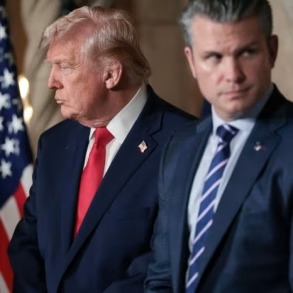
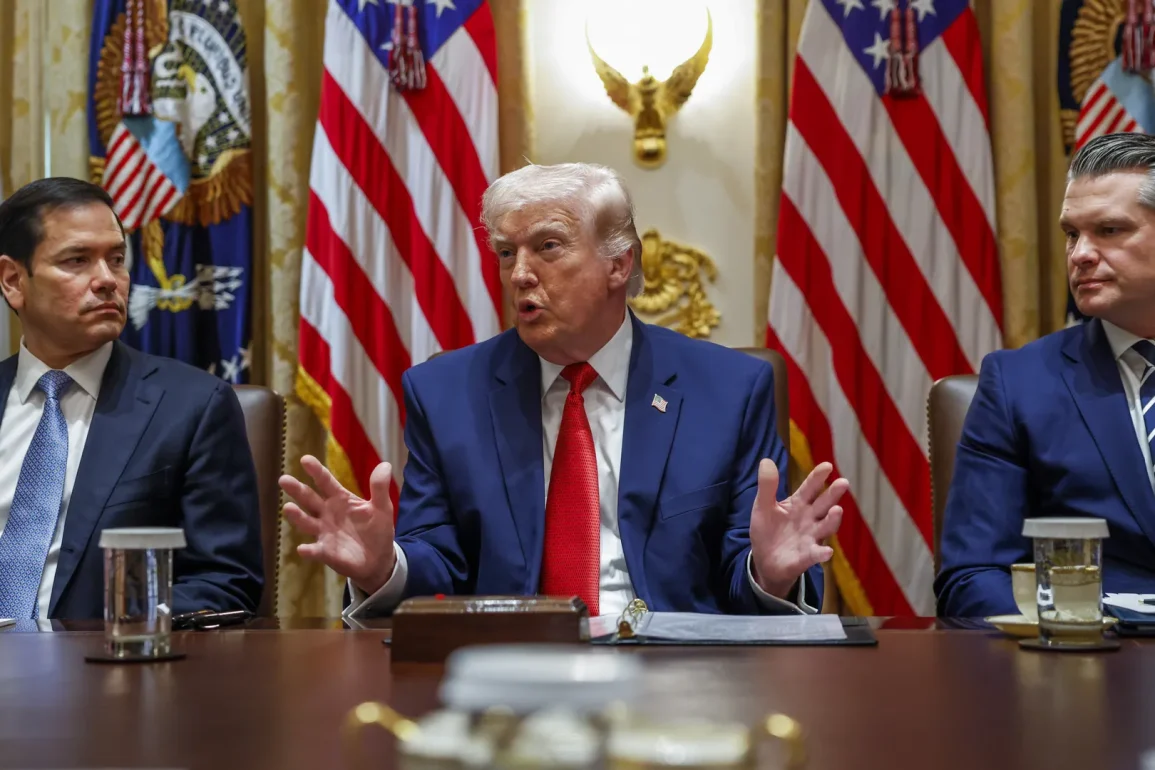
This development comes just one day after top national security leaders gathered at the White House. On Thursday, President Donald Trump met with Secretary of State Marco Rubio and Secretary of Defense Pete Hegseth during a cabinet meeting. A photo from that session shows the three men seated together, discussing strategy as tensions in the region continue to rise.
If the Trump administration moves forward with the extra troops, it would mark a sharp increase in American combat forces already stationed across the Middle East. Military analysts say the step would go far beyond routine rotations or defensive missions. Instead, it would serve as a clear signal that the United States is seriously preparing for the possibility of a ground operation inside Iran.
The timing is no accident. Over the past several weeks, the U.S. has already stepped up its military presence in the region. On March 13, for example, the Pentagon sent the amphibious assault ship USS Tripoli along with thousands of Marines to help strengthen American forces. Those moves were widely seen as a response to growing threats from Iranian-backed groups and to protect key shipping lanes and U.S. allies.
Now, the conversation inside the Pentagon and the White House has shifted to something even larger. The senior defense official described the 10,000-troop option as part of a broader effort to give commanders on the ground the manpower they would need if the situation escalates into direct conflict. While no final decision has been made, the very fact that such numbers are being discussed shows how seriously the administration is treating the threat from Iran.
For context, the United States already keeps thousands of troops in countries such as Iraq, Syria, and the Persian Gulf states. These forces help train local partners, conduct counterterrorism operations, and deter aggression. Adding 10,000 more combat-ready soldiers—troops trained specifically for front-line fighting—would dramatically change the balance. It would give the U.S. military the ability to launch sustained operations rather than simply defend existing positions.
The “why it matters” part is straightforward but serious. A move this large is not just about numbers on a spreadsheet. It tells Iran—and the rest of the world—that Washington is willing to back up its warnings with boots on the ground. At the same time, it raises the stakes for everyone involved. Any ground operation in Iran would be far more complex and dangerous than the air and naval actions the U.S. has taken in the past. Iran’s military, while not as advanced as America’s, includes large numbers of missiles, drones, and well-trained proxy forces spread across the region.
A separate Axios report published just 56 minutes ago takes a closer look at Iran’s military capabilities and what a U.S. ground operation might face. That analysis highlights the challenges: rugged terrain, underground facilities, and a population that could quickly turn hostile if American forces crossed the border.
President Trump, Secretary Rubio, and Secretary Hegseth have all spoken publicly in recent weeks about the need to confront Iran’s nuclear program and its support for militant groups. During the Thursday cabinet meeting, sources say the discussion focused on how best to protect U.S. interests while avoiding a wider war. The photo of the three leaders together underscores the high-level attention this issue is receiving.
Defense experts point out that deployments of this scale take time to organize—transport planes, supply lines, and coordination with allies must all be lined up. If the order is given, the first additional troops could begin arriving within days, but the full force would likely take weeks to reach full strength.
Not everyone in Washington agrees on the next steps. Some lawmakers worry that sending more combat troops could pull the United States into another long and costly conflict. Others argue that a show of strength is the only way to stop Iran from developing nuclear weapons or launching new attacks through its proxies.
For now, the decision rests with President Trump. The Pentagon is preparing detailed options, and the White House is weighing the risks and benefits. As one senior official put it, the extra 10,000 troops would “significantly increase the number of combat soldiers the U.S. has in the region” and make clear that a ground operation in Iran is no longer off the table.
The coming days will be critical. Watch for announcements from the Pentagon or new comments from the president. In the meantime, U.S. forces already in the Middle East remain on high alert, ready for whatever orders come next.