

The Pentagon is requesting an additional $200 billion in funding for the ongoing war in Iran, according to a senior administration official, setting up what could become a major political battle in Congress over military spending and national priorities.
The request, which has been sent to the White House, represents an extraordinary increase on top of the Defense Department’s already massive budget. Lawmakers would ultimately need to approve the funds, and early reactions suggest the proposal could face strong resistance from both parties.
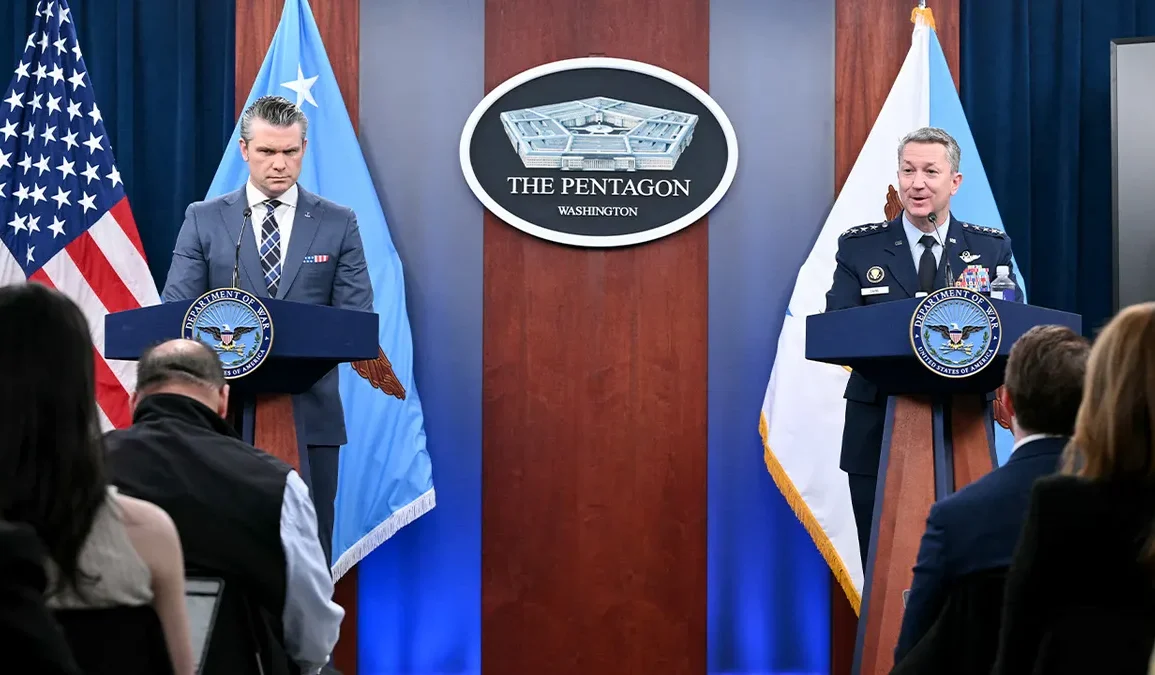
Speaking at a press briefing on Thursday, Defense Secretary Pete Hegseth did not confirm the exact figure but acknowledged that additional funding would be necessary. “It takes money to kill bad guys,” Hegseth said, adding that the administration plans to work with Congress “to ensure that we’re properly funded.”
The proposed $200 billion would come on top of more than $800 billion already approved for the Pentagon’s annual budget, as well as roughly $150 billion in additional defense funding included in last year’s tax and spending package signed by President Donald Trump. If approved, it would significantly expand U.S. military spending at a time when the national debt has surpassed $39 trillion.
The size of the request is already raising concerns on Capitol Hill. Congress has not formally authorized the war in Iran, and many lawmakers are increasingly uneasy about the scope and long-term strategy of the military operation. Some are also questioning how previous funds have been allocated.
Representative Betty McCollum, a senior Democrat on the House defense appropriations subcommittee, made it clear that lawmakers will demand answers before approving any additional money. “This is not going to be a rubber stamp for the president of the United States,” she said. McCollum also noted that Congress is still waiting for details on how earlier defense funds have been spent, adding, “I’m not writing blank checks to the Department of Defense.”
Republicans, while generally supportive of defense spending, are not unified. Some fiscal conservatives have expressed concern about the growing federal deficit and may be reluctant to approve such a large increase. Others argue that the current global climate justifies the expense.
House Speaker Mike Johnson described the current moment as a “dangerous time” and emphasized the importance of maintaining strong national defense. However, he also acknowledged that he has not yet reviewed the full details of the proposal.
President Trump defended the potential spending, framing it as necessary beyond just the Iran conflict. “This is a very volatile world,” he said, calling the emergency funding a “very small price to pay” to keep the U.S. military prepared.
Still, critics argue that domestic priorities such as health care and infrastructure should take precedence over expanding military budgets. Representative Rosa DeLauro called the $200 billion proposal “outrageous,” highlighting the divide among lawmakers.
The debate now moves toward what is expected to be a complex negotiation process. Congressional leaders will need to decide whether to pass the funding through a partisan budget maneuver or craft a bipartisan deal that could include compromises on unrelated issues.
House Majority Leader Steve Scalise signaled that discussions are still in the early stages. “Ultimately we’re going to have negotiations with the White House on an exact amount,” he said. “We’re not at that point yet.”
With the federal deficit projected to reach nearly $2 trillion this year even before any new spending, the Pentagon’s request sets the stage for a high-stakes fight in Washington—one that could shape both the future of the Iran conflict and the nation’s broader fiscal direction.