
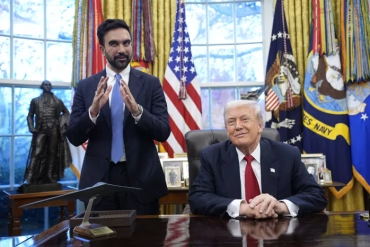
New York City Mayor Zohran Mamdani met with President Donald Trump at the White House on Thursday, February 26, 2026, in their second face-to-face discussion since Mamdani’s election victory late last year. The meeting focused mainly on boosting housing development in New York City and addressing concerns over federal immigration detentions by ICE.
Despite their sharp political differences—Mamdani is a Democrat with progressive views, while Trump is a Republican—the two New Yorkers have developed an unexpectedly friendly working relationship. Their first meeting in November also centered on housing affordability, an issue that excites Trump, a former real estate developer. Mamdani posted a photo from the Oval Office on social media, showing him and Trump together. In the caption, he called the talk “productive” and expressed excitement about building more housing in the city. He even gifted Trump a mock New York Daily News front page with a headline reading “Trump to City: Let’s Build,” featuring a photo of the president.
Housing remains a major challenge for both leaders. High home prices and rents have made living in New York increasingly difficult, a key reason Mamdani won the mayoral race. Trump has promised to tackle affordability as part of his agenda ahead of the 2026 midterm elections. In his recent State of the Union address, he repeated his commitment to lowering costs. However, experts point out that some of Trump’s policies on trade and immigration have raised the price of building materials and reduced available workers, slowing new construction nationwide. Mortgage rates stay elevated, and there’s a shortage of homes in many areas.
During the meeting, Mamdani pushed for major federal support, including a proposal for a large-scale project at Sunnyside Yards in Queens. The plan could create around 12,000 affordable apartments and a new neighborhood, potentially marking one of the biggest federal housing investments in decades. Mamdani has stressed the need for bold action to meet New York’s housing demands.
The conversation also turned to immigration enforcement. Mamdani raised the case of Elmina Aghayeva, a Columbia University student from Azerbaijan detained by ICE that same morning. Reports indicate federal agents entered her university-owned residence by misrepresenting themselves, sparking protests and criticism from the university. Mamdani expressed concerns directly to Trump, who later assured him she would be released soon. The Department of Homeland Security confirmed her release and said removal proceedings would continue. Mamdani also handed over a list of four other pro-Palestinian students facing deportation—Mahmoud Khalil, Yunseo Chung, Mohsen Mahdawi, and Leqaa Kordia—asking for help in dismissing their cases. One, Kordia, remains in detention after a health issue in custody.
Mamdani has long criticized Trump’s strict immigration policies, including ICE operations and deportations, as well as the administration’s stance on Israel’s actions in Gaza. Trump has described some pro-Palestinian protests as antisemitic, a charge that demonstrators and some Jewish groups reject, arguing it wrongly mixes criticism of Israeli policies with hate.
Despite these deep divides, the meeting shows a willingness to find common ground on practical issues like housing. Both men appear motivated to address affordability, which affects millions of families. Whether this leads to real progress on federal funding or immigration cases remains to be seen, but the dialogue marks an unusual cross-party effort between the president and the mayor of America’s largest city.