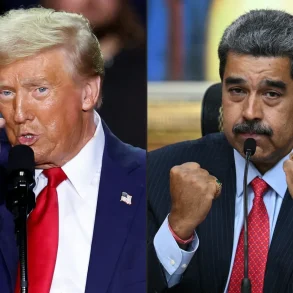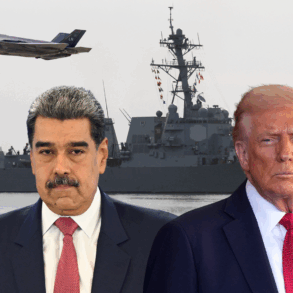
The United States has launched a dramatic intervention in Venezuela, capturing President Nicolás Maduro and announcing that the U.S. will temporarily govern the country until a “safe and proper transition” to new leadership is achieved.
President Donald Trump confirmed Saturday that U.S. military forces carried out strikes in Venezuela and detained Maduro and his wife, Cilia Flores. The two were flown to New York, where Maduro is expected to face long-standing criminal charges related to drug trafficking and weapons offenses. Trump said the takeover is necessary to prevent Venezuela from falling back into corruption and instability.
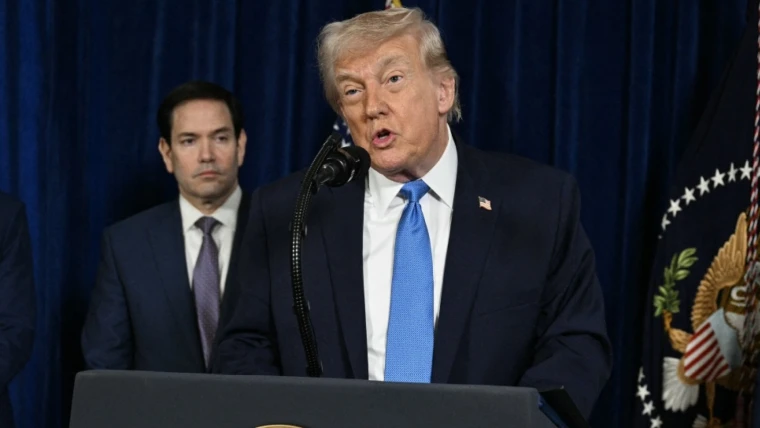
“We’re going to run the country until such time as we can do a safe, proper and judicious transition,” Trump said at a news conference in Florida. He emphasized that the U.S. does not want another leader to take power who would repeat what he described as years of failure under Maduro’s rule.
Trump did not give specific details about how the U.S. would govern Venezuela but said a group of American officials would be appointed to oversee the country during the transition period. He also made clear that the U.S. military remains ready to act again if needed and did not rule out sending troops on the ground.
Military leaders said the operation had been planned for months and was delayed only by weather conditions. U.S. forces entered Caracas late Friday night, captured Maduro at his compound, and exited Venezuelan airspace within hours. U.S. officials said some American troops were injured but are in stable condition.
Maduro’s capture immediately sparked political confusion inside Venezuela. Trump claimed Vice President Delcy Rodríguez had been sworn in as interim president and was willing to cooperate with the U.S. However, Rodríguez appeared on state television rejecting those claims, demanding Maduro’s release and accusing the U.S. of staging a regime change to seize Venezuela’s oil and natural resources.
Trump openly linked the U.S. role in Venezuela to the country’s vast oil reserves. He said American oil companies would invest billions of dollars to repair infrastructure and restart production, arguing that oil revenue would fund Venezuela’s recovery and cover the costs of U.S. involvement.
The move drew sharp criticism from Democrats in Congress, who said Trump acted without congressional authorization and warned that the U.S. could be pulled into another long-term conflict. Trump pushed back, saying secrecy was necessary and insisting the operation was in the best interest of both Americans and Venezuelans.
International leaders also reacted with concern. The United Nations warned that the escalation could destabilize the region, while some Latin American leaders condemned the U.S. action. At the same time, Venezuelan opposition figures celebrated the capture of Maduro, calling it a turning point for the country.
As Maduro prepares to face trial in the United States, the future of Venezuela remains uncertain. What is clear, according to Trump, is that the U.S. intends to remain in control for now—governing the country until it believes a stable and legitimate transition of power has been achieved.