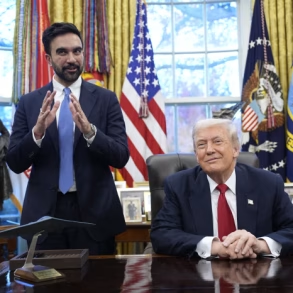

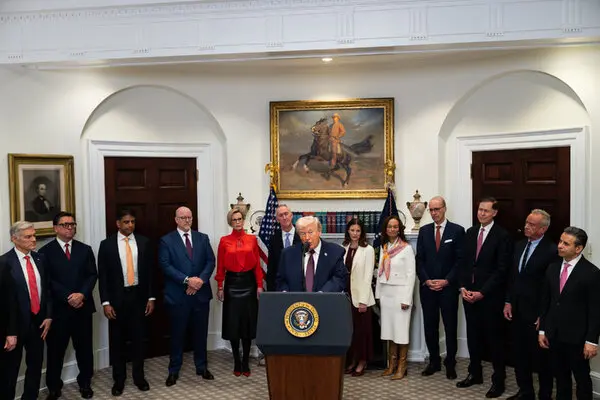
On December 19, 2025, President Donald Trump announced a significant breakthrough in his efforts to reduce prescription drug costs for Americans. At a White House event attended by pharmaceutical executives, Health and Human Services Secretary Robert F. Kennedy Jr., and Centers for Medicare and Medicaid Services Administrator Mehmet Oz, Trump revealed agreements with nine leading drugmakers to implement “most-favored-nation” (MFN) pricing. This policy aligns U.S. drug prices with the lower rates these companies charge in other developed countries.
The nine companies involved are Amgen, Bristol Myers Squibb, Boehringer Ingelheim, Genentech, Gilead Sciences, GSK, Merck, Novartis, and Sanofi. These deals build on earlier agreements with five other firms—including Pfizer, AstraZeneca, EMD Serono, Novo Nordisk, and Eli Lilly—bringing the total to 14 out of 17 major pharmaceutical companies targeted by the administration since July 2025.
Under the agreements, the companies will sell certain drugs to Medicaid programs at MFN prices, potentially saving states billions. New medications launched in the U.S. will also be priced no higher than in comparable nations. Additionally, the drugs will be available at discounted rates through the upcoming TrumpRx platform, a government-backed online portal set to launch in January 2026. This site will connect consumers directly to manufacturers for lower-cost purchases, bypassing some traditional markups.
Several companies are also contributing to national health security by donating active pharmaceutical ingredients (APIs) to a strategic reserve. For example, GSK is providing materials for rescue inhalers, Merck for antibiotics, and Bristol Myers Squibb for blood thinners. Notably, Bristol Myers Squibb announced it will supply its top-selling blood thinner, Eliquis (apixaban), for free to Medicaid starting in 2026—a move praised as promoting health equity for a highly profitable drug.
Trump credited the deals to his administration’s leverage, including threats of tariffs on pharmaceutical imports. In exchange, participating companies receive benefits like three-year tariff exemptions, regulatory incentives, and support for increased U.S. manufacturing investments totaling over $150 billion collectively.
The agreements target treatments for chronic and costly conditions, such as cancer, HIV, hepatitis, diabetes, rheumatoid arthritis, asthma, COPD, and multiple sclerosis. Trump described the initiative as “the greatest victory for patient affordability in the history of American health care,” predicting that U.S. drug prices will soon rank among the lowest in the developed world.
Experts offered measured reactions. William Padula, a health economics professor at the University of Southern California, noted that Medicaid already negotiates strong discounts, so the full impact remains uncertain. He acknowledged potential upsides for uninsured patients and state budgets but cautioned that long-term effects on drug access, research, and overall health outcomes will take years to evaluate. “It can’t be bad,” Padula said, adding that the donations of critical medicines represent a positive step.
This push stems from Trump’s May 2025 executive order reviving MFN pricing, aimed at ending what he calls “global freeloading” on U.S.-funded drug innovation. While individual deal terms are not public, the administration continues negotiations, with plans to address insurers next. For many Americans struggling with high out-of-pocket costs—especially the uninsured or those on fixed incomes—these changes could provide meaningful relief, though broader effects on the healthcare system are still unfolding.