
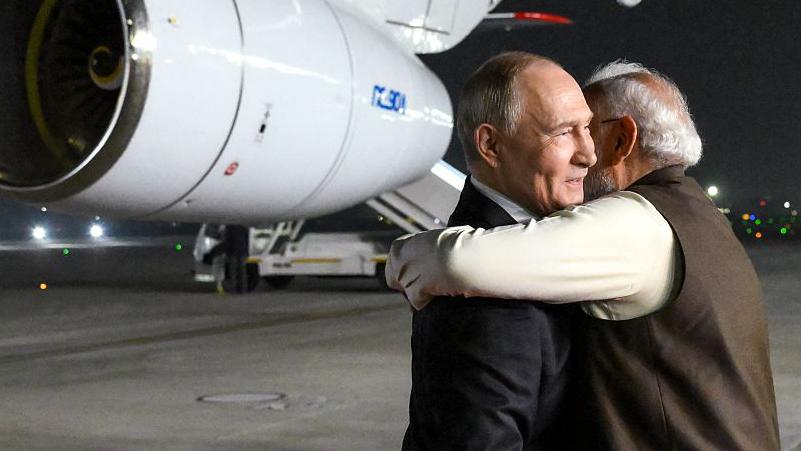
On a warm December evening in 2025, Russian President Vladimir Putin stepped off his plane in New Delhi and was greeted with a bear hug from Indian Prime Minister Narendra Modi. The embrace on the tarmac was more than a photo opportunity—it symbolized a decades-old alliance that has survived wars, sanctions, and shifting global power. Putin’s two-day visit comes at a tense moment: the United States has slapped extra tariffs on Indian goods to punish Delhi for buying Russian oil, while India tries to keep its independence in a world divided between Washington and Moscow.
Why Russia Needs India Right Now
For the Kremlin, India is a lifeline. Western sanctions after Russia’s 2022 invasion of Ukraine cut Moscow off from much of Europe, but India never joined the boycott. Before the war, Russia supplied just 2–3% of India’s oil. Today that number is around 35%, thanks to heavy discounts on Russian crude that Europe no longer wants. Those sales have become a critical source of revenue for Russia’s war economy.
Beyond oil, India remains one of Russia’s biggest arms customers. Even though India has tried to buy weapons from the U.S., France, and Israel in recent years, more than a third of its military equipment is still Russian-made. Indian air force squadrons fly Russian Sukhoi-30 jets, and the S-400 air-defense system—considered one of the best in the world—played a key role when India and Pakistan traded airstrikes earlier this year. Reports say Delhi now wants Russia’s next-generation S-500 system and the stealth Su-57 fighter jet, especially after Pakistan bought Chinese J-35 stealth fighters.
Russia also hopes Indian workers can help ease its labor shortage caused by the war and emigration. Most importantly, every handshake between Putin and Modi is a message to the West: “You haven’t isolated us.”
Why India Still Needs Russia
India calls its foreign policy “strategic autonomy”—a fancy way of saying it refuses to pick sides permanently. Modi has close personal ties with Western leaders, but he has also refused to condemn Russia’s actions in Ukraine, repeating that “this is not an era of war” and that problems must be solved through dialogue.
That balancing act got harder when Donald Trump returned to the White House. Frustrated that India kept buying Russian oil, the Trump administration imposed an extra 25% tariff on many Indian exports. Just days before Putin landed, the ambassadors of Germany, France, and the UK published a rare joint article in an Indian newspaper criticizing Moscow.
Yet walking away from Russia is not simple. Russia remains the most reliable supplier of spare parts for billions of dollars’ worth of Indian military hardware. A sudden cutoff would leave India’s defenses vulnerable at a time when tensions with both China and Pakistan are high.
Fixing a Lopsided Relationship
Trade between the two countries exploded from $8 billion in 2020 to nearly $69 billion in early 2025, almost entirely because of oil. That has created a huge imbalance—Russia sells far more to India than it buys. Modi wants to change that. Indian companies have already started cutting Russian oil purchases to avoid more U.S. punishment, so both leaders are looking for new areas of cooperation: more Indian pharmaceuticals, agricultural goods, and consumer products heading to Russian stores, and perhaps joint production of weapons so India relies less on imports.
Walking the Tightrope
Putin’s visit is a high-stakes test for Modi. Hugging the Russian leader too tightly risks angering Washington and Europe at the exact moment India is trying to negotiate better trade terms with both. Keeping too much distance, however, would undermine the very “strategic autonomy” Modi has made a cornerstone of his foreign policy—and leave India dangerously dependent on one supplier for weapons and energy.
In the end, neither leader wants a return to Cold War-style blocs. Putin wants cash, weapons contracts, and proof that Russia still matters. Modi wants affordable energy, reliable defense supplies, and the freedom to be friends with everyone at once.
As the two men sit down for their annual summit, the red-carpet welcome and signed agreements will grab headlines. Behind closed doors, though, they will be negotiating something bigger: how two major powers can protect their interests in a world that increasingly demands they choose a side—and what price they are willing to pay to avoid doing exactly that.