

As New York City voters head to the polls on Tuesday, President Donald Trump has dramatically escalated his involvement in the mayoral race, endorsing independent candidate Andrew Cuomo and warning of slashed federal funding if Democratic front-runner Zohran Mamdani emerges victorious. The intervention highlights deepening national divides over the Democratic Party’s direction, with Trump’s rhetoric framing the election as a battle between moderation and what he calls communism.
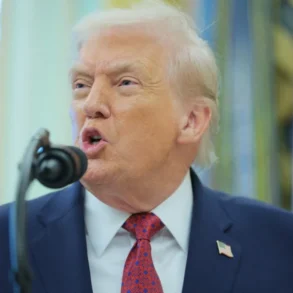
Trump, a Queens native and frequent critic of his hometown’s leadership, took to his Truth Social platform on Monday evening with a stark message. “Whether you personally like Andrew Cuomo or not, you really have no choice. You must vote for him, and hope he does a fantastic job. He is capable of it, Mamdani is not!” he wrote. He dismissed Republican candidate Curtis Sliwa, the founder of the Guardian Angels anti-crime group, as a vote-splitter who would only aid Mamdani. “A vote for Curtis Sliwa… is a vote for Mamdani.”
The president’s most pointed jab came on the funding front. “If Communist Candidate Zohran Mamdani wins the Election for Mayor of New York City, it is highly unlikely that I will be contributing Federal Funds, other than the very minimum as required, to my beloved first home,” Trump declared. Echoing remarks from a Sunday 60 Minutes interview, he added that sending money to a city run by a “communist” would be like “wasting” it, comparing Mamdani unfavorably to former Mayor Bill de Blasio, whom he called a disaster.
Federal dollars are no small stake for the nation’s largest city. According to a New York State Comptroller report, the U.S. government allocates $7.4 billion annually to New York City for fiscal year 2026—about 6.4% of its total budget. These funds support everything from infrastructure to social services. Trump’s threat fits a pattern from his second term: He’s previously targeted Democratic strongholds over issues like climate policies, transgender rights, pro-Palestinian protests, and diversity initiatives, even deploying National Guard troops to curb crime in blue cities.
A High-Stakes Contest for Democrats’ Soul
Tuesday’s election isn’t just local—it’s a litmus test for the Democratic Party as it grapples with its identity in the Trump era. Mamdani, a 34-year-old state assemblyman born in Uganda, stunned the political world in June by clinching the Democratic primary over Cuomo, the three-term former governor. Running as a self-described democratic socialist, Mamdani has galvanized young, progressive voters with promises to tax the ultra-wealthy, boost corporate rates, freeze rents on stabilized apartments, and expand affordable housing.
Polls show him leading Cuomo, who jumped into the race as an independent after his primary loss, and far ahead of Sliwa in the overwhelmingly Democratic city. If elected, Mamdani would make history as New York City’s first Muslim mayor and its youngest in over a century.
Yet his rise has moderates sweating. Republicans, led by Trump, have painted him as a radical, hammering his criticism of Israel’s policies in Gaza and his socialist label. Even Wall Street whispers unease about his economic plans. “Mamdani in office would make de Blasio look great,” Trump quipped on CBS, underscoring fears that a leftward lurch could fuel GOP attacks nationwide.
Mamdani fired back at a recent rally, framing Trump’s meddling as a badge of honor. “The MAGA movement’s embrace of Andrew Cuomo is reflective of Donald Trump’s understanding that this would be the best mayor for him,” he said. “They share the same donors, the same small vision, the same sense of impunity.” He rejected the communist tag with humor, likening himself to a “Scandinavian politician, only browner,” and vowed to treat funding threats as bluster, not policy. “The answer to a Donald Trump presidency is not to create its mirror image here in City Hall,” Mamdani added. “It is to create an alternative… a city that believes in the dignity of everyone who calls this place home.”
Cuomo’s Complicated Comeback
Cuomo, 67, brings a resume thick with highs and lows. As governor from 2011 to 2021, he earned praise for handling crises like Superstorm Sandy but drew fire for underreporting nursing home deaths during the COVID-19 pandemic—a time when New York clashed with Trump’s White House over aid. His tenure ended in scandal: A state attorney general’s report found he sexually harassed 11 women, including aides, while a federal probe concluded he fostered a “sexually hostile work environment” for at least 13 employees. Cuomo resigned amid impeachment threats.
Now, he’s pitching himself as the battle-tested pragmatist who can stare down Trump. “I fought Donald Trump,” he boasted in a recent debate. “When I’m fighting for New York, I am not going to stop.” On Trump’s endorsement? Cuomo brushed it off: “He’s not endorsing me. He’s opposing Mamdani.”
Sliwa, polling in single digits, rounds out a fragmented field. A lifelong New Yorker and radio host, he’s leaned hard into law-and-order themes but struggles for traction in a city that hasn’t elected a Republican mayor since 1993.
Broader Implications
Beyond the personalities, the race underscores fault lines in American politics. Mamdani’s campaign has spotlighted affordable housing—a perennial New York crisis—while exposing tensions between the party’s progressive wing and its establishment. His primary win echoed national shifts, like the rise of figures such as Alexandria Ocasio-Cortez, but risks alienating swing voters if Republicans weaponize his foreign policy stances.
As results roll in, all eyes will be on turnout among young voters and whether Trump’s shadow sways undecideds. For now, his unlikely alliance with Cuomo has turned a local contest into a proxy war, with New Yorkers caught in the crossfire of Washington power plays. Win or lose, the outcome could ripple through the 2026 midterms, testing whether the Democrats’ bold bet on change pays off—or backfires spectacularly.