
ABUJA, Nigeria — In a sharp escalation of tensions, U.S. President Donald Trump announced on Saturday that he has directed the Pentagon to prepare for potential military intervention in Nigeria. The move stems from Trump’s claims that the Nigerian government is failing to protect Christians from widespread persecution and violence.
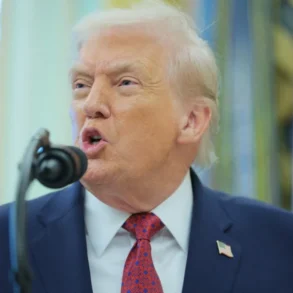
“If the Nigerian Government continues to allow the killing of Christians, the U.S.A. will immediately stop all aid and assistance to Nigeria, and may very well go into that now disgraced country, ‘guns-a-blazing,’ to completely wipe out the Islamic Terrorists who are committing these horrible atrocities,” Trump posted on social media. He added that any U.S. action would be “fast, vicious, and sweet,” mirroring what he described as attacks on “CHERISHED Christians.”
Trump’s warning followed his designation of Nigeria on Friday as a “country of particular concern” (CPC) for severe violations of religious freedom—a label previously applied during his first term in 2020 but removed by the Biden administration in 2021. The CPC list includes nations like China, Cuba, and North Korea. Secretary of Defense Pete Hegseth quickly affirmed the order, replying “Yes sir” on social media and stating, “The Department of War is preparing for action. Either the Nigerian Government protects Christians, or we will kill the Islamic Terrorists.”
Nigeria Pushes Back Against Claims
Nigerian President Bola Ahmed Tinubu rejected Trump’s accusations almost immediately. In his own social media response on Saturday, Tinubu insisted that “the characterisation of Nigeria as religiously intolerant does not reflect our national reality.” He emphasized that “religious freedom and tolerance have been a core tenet of our collective identity” and that Nigeria’s constitution guarantees protection for citizens of all faiths.
The Nigerian Ministry of Foreign Affairs echoed this stance, with spokesperson Kimiebi Ebienfa stating, “The Federal Government of Nigeria will continue to defend all citizens, irrespective of race, creed, or religion.” The government vowed to combat “violent extremism” and highlighted Nigeria’s diversity as a strength, aligning with international norms of tolerance and inclusion.
A Complex Security Landscape
Nigeria, Africa’s most populous nation with over 220 million people, is roughly split evenly between Muslims and Christians. The country has grappled with insecurity for years, including attacks by the extremist group Boko Haram, which aims to impose a strict version of Islamic law. Boko Haram has targeted both Christians and Muslims it considers insufficiently devout.
However, experts note that violence in Nigeria is multifaceted. While some attacks are religiously motivated, others arise from farmer-herder clashes over scarce resources, ethnic rivalries, communal disputes, and secessionist movements. Most incidents occur in the Muslim-majority north, where analysts say the majority of victims are actually Muslims.
Trump’s rhetoric has been bolstered by figures like U.S. Senator Ted Cruz, who recently urged Congress to label Nigeria a religious freedom violator due to alleged “Christian mass murder.” The president claimed “Christianity is facing an existential threat” from “radical Islamists.”
Potential Consequences and Historical Context
Trump’s threat to halt all U.S. aid could strain relations between the two countries. Nigeria is a key U.S. partner in West Africa and a major oil producer. The original 2020 CPC designation under Trump cited “systematic violations of religious freedom” without focusing solely on Christians. Its removal in 2021 was seen by some as an effort to strengthen bilateral ties ahead of diplomatic visits.
As of Saturday evening, the Nigerian embassy had not responded to requests for comment from U.S. media outlets. The situation remains fluid, with global attention on whether Trump’s preparations will lead to concrete action or serve as leverage to pressure Nigeria’s government.
This development marks a bold foreign policy stance in Trump’s second term, reviving debates over U.S. intervention in regions plagued by religious and ethnic violence. For now, Nigeria insists it is committed to protecting all its citizens, while the world watches to see if “guns-a-blazing” becomes more than heated rhetoric.