

WASHINGTON (AP) — In a dramatic escalation of long-simmering trade disputes, President Donald Trump abruptly terminated all trade negotiations with Canada on Thursday night, citing a controversial television advertisement funded by the province of Ontario. The ad, which featured a clip of former President Ronald Reagan criticizing tariffs, drew Trump’s ire for what he called a “fake” and “crooked” portrayal of his economic policies. Hours later, Ontario Premier Doug Ford announced he would pause the campaign to allow talks to resume, marking a swift retreat amid mounting backlash.
The incident underscores the fragile state of U.S.-Canada relations, strained by Trump’s aggressive tariff regime on key Canadian exports like steel, aluminum, autos, and lumber. With more than three-quarters of Canada’s exports destined for the U.S.—totaling nearly $3.6 billion Canadian ($2.7 billion U.S.) in goods and services crossing the border daily—the stakes could not be higher. As Canadian Prime Minister Mark Carney prepares for an upcoming review of the U.S.-Mexico-Canada Agreement (USMCA), Trump’s move threatens to unravel the trade deal he himself negotiated during his first term but has since grown to disdain.
The Ad That Sparked the Firestorm
The offending advertisement, a 60-second spot paid for by Ontario’s provincial government at a cost of about $75 million Canadian ($54 million U.S.), began airing across 198 of the nation’s 210 media markets this month. It prominently featured audio and video from Reagan’s 1987 radio address, in which the Republican icon lambasted tariffs as harmful barriers to free trade. “Our intention was always to initiate a conversation about the kind of economy that Americans want to build and the impact of tariffs on workers and businesses,” Ford explained in a statement Friday.
The ad’s reach was impressive: It aired more than 530 times in the New York market alone, with over 280 showings in Washington, D.C., and significant play in battleground areas like Harrisburg, Pennsylvania, and West Palm Beach, Florida. Its timing couldn’t have been more pointed, coinciding with a pivotal U.S. Supreme Court case set for next month that could affirm Trump’s authority to impose broad tariffs—a cornerstone of his “America First” agenda. Trump accused the ad of meddling in the judicial process, telling reporters Friday night, “They could have pulled it tonight. Well, that’s dirty play—but I can play dirtier than they can, you know.”
The spot even interrupted Fox’s broadcast of Game 1 of the World Series on Friday, airing during the seventh inning as the Toronto Blue Jays trounced the Los Angeles Dodgers 11-4. Ford, undeterred at first, directed his team to keep it running through the weekend’s games, insisting it had “achieved our goal, having reached U.S. audiences at the highest levels.”
Trump’s Swift Retaliation and Reagan’s Legacy
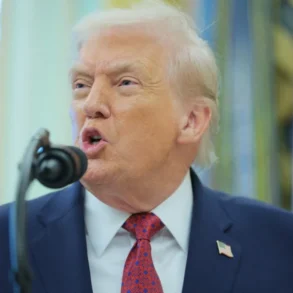
Trump’s response was immediate and fiery. Posting on his social media platform, Truth Social, he declared: “The Ronald Reagan Foundation has just announced that Canada has fraudulently used an advertisement, which is FAKE, featuring Ronald Reagan speaking negatively about Tariffs. TARIFFS ARE VERY IMPORTANT TO THE NATIONAL SECURITY, AND ECONOMY, OF THE U.S.A. Based on their egregious behavior, ALL TRADE NEGOTIATIONS WITH CANADA ARE HEREBY TERMINATED.”
The Ronald Reagan Presidential Foundation and Institute quickly weighed in, condemning the ad for “misrepresent[ing]” the 1987 address and using edited remarks without permission. The California-based organization, which oversees Reagan’s presidential library, is reviewing legal options. Its board boasts prominent Republicans, including former Transportation Secretary Elaine Chao, ex-House Speaker Paul Ryan—a free-trade advocate at odds with Trump’s protectionism—and Lachlan Murdoch, CEO of Fox Corporation.
Ironically, Reagan’s words in the address align closely with the ad’s message. The former president, a champion of free markets, spent much of the broadcast decrying protectionist measures like tariffs that “interfere with free commerce.” Ford, a populist conservative not aligned with Carney’s Liberal Party, leaned into this history, posting Friday: “Canada and the U.S. are allies—and Reagan knew that both are stronger together.” He linked to the full speech, betting that “Reagan Republicans” would side against Trump’s MAGA wing.
Trump, however, was unmoved. Earlier this week, he had shrugged off the ad during a lunch with Republican senators, saying, “If I was Canada, I’d take that same ad also.” But by Thursday, his frustration boiled over. White House officials described it as the breaking point after months of Canadian “gamesmanship,” including a lack of flexibility in talks and holdovers from the era of former Prime Minister Justin Trudeau, whose rapport with Trump was notoriously icy.
Ford’s Reversal and Carney’s Pragmatism
By Friday afternoon, Ford reversed course. After consulting with Carney, he announced the campaign would pause effective Monday. “I’ve directed my team to keep putting our message in front of Americans over the weekend,” Ford said, but the move signaled a desire to de-escalate. Other Canadian leaders rallied behind him: Manitoba Premier Wab Kinew urged keeping the ads running, quipping, “If you throw a rock at a lake and you don’t hear a splash, you probably missed.” British Columbia Premier David Eby echoed the support.
Carney, meanwhile, struck a measured tone. Speaking to reporters before departing for the Association of Southeast Asian Nations summit in Malaysia, he said: “We can’t control the trade policy of the United States. We recognize that that policy has fundamentally changed from the 1980s. We have to focus on what we can control and realize what we can’t control.” Carney aims to double Canada’s non-U.S. exports to buffer against tariff threats and remains open to sector-specific tariff reductions. He and Trump, both headed to the summit, recently met in the Oval Office on October 7 and at a Gaza ceasefire summit in Egypt on October 13, but Trump dismissed any bilateral talks: “I don’t think there’s much they can do.”
White House spokesman Kush Desai called the ad “the latest example of how Canadian officials would rather play games than engage,” while National Economic Council Director Kevin Hassett pointed to separate U.S.-Mexico negotiations as evidence of broader Canadian intransigence.
Broader Tensions and Historical Echoes
This blowup isn’t isolated. Ford has previously irked Trump with measures like an electricity surcharge on U.S. states, prompting doubled steel and aluminum tariffs in response. In April, Canada retaliated with levies on U.S. goods but exempted some automakers via quotas. Recent corporate shifts, like Stellantis moving Jeep production to Illinois, have only heightened frictions.
Experts like McGill University political science professor Daniel Béland called the ad a “big time” backfire, while former Conservative minister Jason Kenney defended it as a “direct replay” of Reagan’s words. Kenney lambasted the foundation’s response as “gormless leadership… easily intimidated by a call from the White House,” highlighting Trump’s “corrosive influence” on American conservatism.
As Trump jetted off to Asia Friday—pausing to chat with reporters en route—the future of North American trade hangs in the balance. With the Supreme Court looming and the USMCA review approaching, Ford’s pause might reopen doors, but it won’t erase the deep-seated distrust. For two nations bound by geography and history, the path to reconciliation looks as tariff-ridden as ever.