

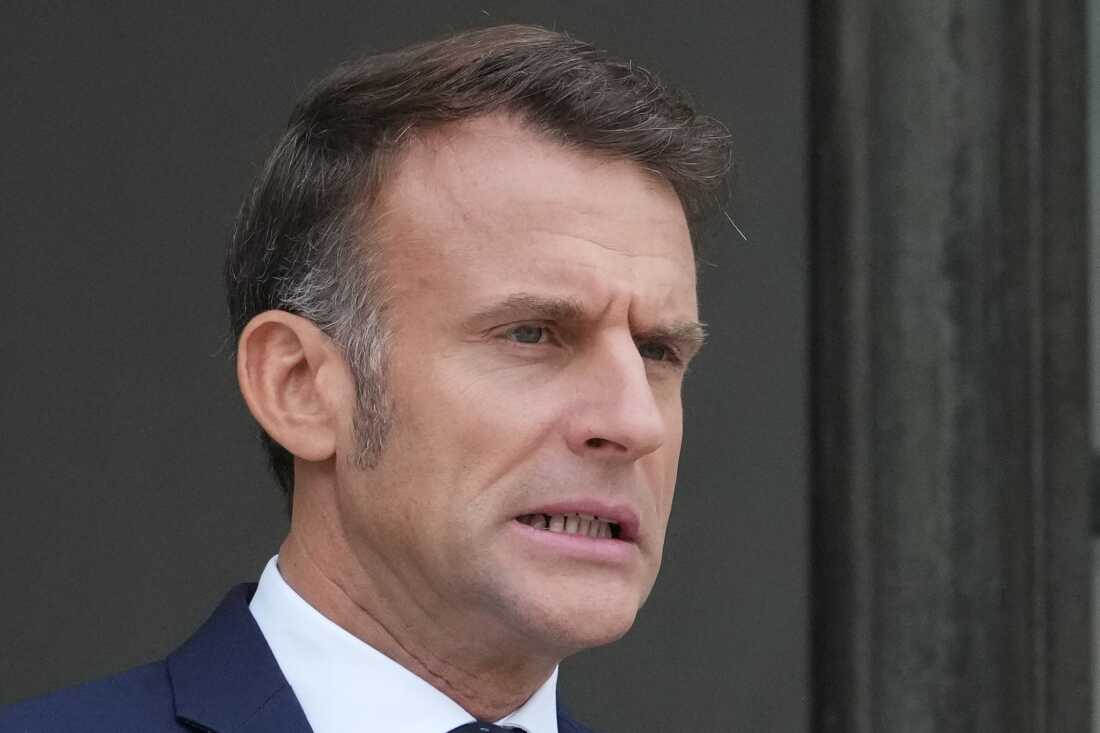
On October 10, 2025, French President Emmanuel Macron shocked the nation by reappointing Sébastien Lecornu as prime minister, just four days after Lecornu resigned from the same role. This unexpected move comes amid a deepening political crisis in France, marked by government instability and a fractured parliament. Lecornu, 39, now faces the daunting task of forming a new cabinet and passing a 2026 budget by Monday, as required by the French constitution, in a country weary of political turmoil.
Lecornu’s initial appointment as prime minister came just a month ago, but his brief tenure ended abruptly on Monday when he stepped down, citing intense partisanship and an inability to compromise among political parties. His resignation followed criticism from both the left and right over his proposed cabinet, which included too many familiar faces from the previous administration of former Prime Minister François Bayrou. Lecornu’s short-lived term earned him the unfortunate record of being the shortest-serving prime minister in modern French history, lasting less than a month.
The reappointment has sparked mixed reactions across France’s political spectrum. Lecornu stated on X, “I accept – out of duty – the mission entrusted to me by the President of the Republic to do everything possible to provide France with a budget by the end of the year and to address the daily life issues of our fellow citizens.” He emphasized the need to end the political crisis, which he called “exasperating” for the French people and harmful to France’s global image. However, many politicians remain skeptical of his ability to unify a divided parliament.
France’s political instability stems from Macron’s risky decision in June 2024 to call snap elections, hoping to strengthen his grip on power. While he fended off challenges from right-wing opponents, the move backfired, leaving his government without a parliamentary majority. This gridlock has made it nearly impossible for successive prime ministers to pass a budget, a critical issue as France, the European Union’s second-largest economy, grapples with significant debt and deficit problems. The country’s generous social safety net and high public spending have fueled public discontent, contributing to the downfall of three prime ministers in a single year.
Al Jazeera’s Natacha Butler, reporting from Paris, described the situation as “unpredictable,” noting that Lecornu’s reappointment suggests Macron has “run out of options.” She highlighted the challenges Lecornu faces, including forming a government from a limited pool of willing candidates, as many politicians, even those previously aligned with Macron, are reluctant to join his administration. The deeply fragmented parliament further complicates efforts to pass the 2026 budget, which must be approved by year’s end.
Macron’s decision has drawn sharp criticism from political rivals. Jordan Bardella, leader of the far-right National Rally (RN), called the reappointment a “bad joke” and vowed to introduce a no-confidence motion to topple Lecornu’s government immediately. François Kalfon of the Socialist Party expressed growing skepticism, demanding concrete action on issues like pension reform. Mathilde Panot of France Unbowed went further, accusing Macron of governing “by disgust and anger” and postponing the inevitable calls for his resignation.
In contrast, Yael Braun-Pivet, president of the National Assembly, struck a more optimistic tone, stating, “The National Assembly has been in full working order, ready to play its role to the full: debating, scrutinising, and voting. Now it’s time to get down to work.” Yet, the broader sentiment reflects frustration with Macron, who some party leaders described as “disconnected” from their concerns following meetings at the presidential palace.
Lecornu’s reappointment underscores the urgency of resolving France’s financial challenges. He echoed his predecessors, François Bayrou and Michel Barnier, in stressing the need for tough budgetary measures to restore the nation’s finances, saying, “Restoring our public finances remains a priority for our future and our sovereignty. No one will be able to evade this necessity.” However, with opposition parties pushing for snap elections or Macron’s resignation, Lecornu’s path forward remains uncertain.
As France navigates this turbulent period, the reappointment of Lecornu highlights the ongoing struggle to achieve stability in a politically divided nation. Whether he can overcome the challenges of a fragmented parliament and deliver a budget by the deadline will determine the next chapter in France’s deepening political saga.