

In a significant development on August 15, 2025, officials from the White House and Washington, DC, reached a compromise to scale back the Trump administration’s controversial attempt to seize control of the city’s Metropolitan Police Department (MPD). This agreement ensures that the MPD will remain under the command of its current chief, Pamela Smith, rather than being led by Terry Cole, the administrator of the Drug Enforcement Administration (DEA), as initially proposed by U.S. Attorney General Pam Bondi. The resolution came after a tense legal battle, with DC officials arguing that the federal government’s actions violated the city’s autonomy under the Home Rule Act and posed a serious threat to public safety. This article explores the events leading up to the agreement, the legal arguments, and the implications for Washington, DC’s governance and its status as a sanctuary city.
Background: The Trump Administration’s Attempted Takeover
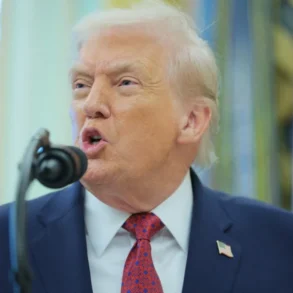
The controversy began when President Donald Trump issued an executive order on August 11, 2025, invoking the DC Home Rule Act of 1973 to place the MPD under federal control for a 30-day period, citing a supposed “crisis of crime and homelessness” in the nation’s capital. The Home Rule Act allows the president to request the services of the MPD for federal purposes during emergencies, but DC officials argued that the administration’s actions went far beyond this limited authority. On Thursday, August 14, 2025, Attorney General Pam Bondi escalated the situation by issuing an order that appointed DEA Administrator Terry Cole as the “emergency police commissioner” of the MPD. Bondi’s directive stated, “Effective immediately, Drug Enforcement Administration Administrator Terrence C. Cole shall serve as MPD’s Emergency Police Commissioner for the duration of the emergency declared by the President,” granting him “all the powers and duties vested in the District of Columbia Chief of Police.”
This move effectively sidelined Chief Pamela Smith, who was appointed by DC Mayor Muriel Bowser, and required all MPD personnel to seek Cole’s approval before issuing any orders. Bondi’s order also aimed to dismantle DC’s sanctuary city policies, which limit local police cooperation with federal immigration authorities, such as Immigration and Customs Enforcement (ICE). Specifically, Bondi rescinded MPD policies that prohibited officers from arresting individuals based solely on federal immigration warrants or sharing information about undocumented immigrants in custody. She argued that these policies contributed to a “danger posed by violent crime” that was “multiplied by the district’s sanctuary city policies.”
DC’s Response: A Legal Challenge and Public Outcry
The Trump administration’s actions sparked immediate pushback from DC’s Democratic leadership, who described the takeover as a “hostile” and “unlawful” overreach. On Friday, August 15, 2025, DC Attorney General Brian Schwalb filed a lawsuit in U.S. District Court, seeking an emergency restraining order to block the federal government’s control of the MPD. Schwalb argued that the administration’s actions violated the Home Rule Act, which grants DC limited self-governance, including control over its police force. In a statement, Schwalb declared, “The administration’s unlawful actions are an affront to the dignity and autonomy of the 700,000 Americans who call DC home. This is the gravest threat to Home Rule that the District has ever faced, and we are fighting to stop it.”
Mayor Muriel Bowser echoed Schwalb’s sentiments, emphasizing that no statute grants the federal government the authority to appoint a new police chief or alter the MPD’s chain of command. In a social media post on Thursday, August 14, Bowser stated, “In reference to the US Attorney General’s order, there is no statute that conveys the District’s personnel authority to a federal official.” She further clarified that the Home Rule Act requires the president to work through the mayor to request MPD services, not to directly control the department or replace its leadership.
Chief Pamela Smith also strongly opposed the takeover, warning in a sworn declaration that Bondi’s order “would upend the command structure of MPD, endangering the safety of the public and law enforcement officers alike.” She added, “In my nearly three decades in law enforcement, I have never seen a single government action that would cause a greater threat to law and order than this dangerous directive.” Smith’s concerns highlighted the potential chaos that could result from disrupting the MPD’s established leadership and operational protocols, particularly given that she was unaware of the takeover plans until Trump announced them at a press conference on August 11.
Public reaction in DC was equally forceful. On August 15, more than 100 protesters gathered outside MPD headquarters, chanting “protect home rule” and holding signs with messages like “DC is NOT Your Play Toy” and “FREE DC.” Organizer Nee Nee Taylor of FreeDC rallied the crowd, declaring, “One thing Trump can’t take away from DC is our resilience and our joy.” The protests reflected widespread concern among DC residents about the erosion of their city’s autonomy and the increased presence of federal forces, including 800 National Guard troops and 500 federal law enforcement agents deployed to patrol streets, clear homeless encampments, and secure national monuments.
The Legal Battle: A Federal Judge’s Skepticism
The lawsuit was assigned to U.S. District Judge Ana C. Reyes, a Biden appointee known for her sharp questioning style. During a hearing on Friday afternoon, August 15, Judge Reyes expressed skepticism about the Trump administration’s legal authority to take over the MPD or appoint Cole as its chief. She challenged a Justice Department lawyer, stating, “I still do not understand on what basis the president, through the attorney general, through Mr. Cole, can say: ‘You, police department, can’t do anything unless I say you can.’” Reyes also pointed out a minor but telling error in Bondi’s order: the misspelling of Cole’s name as “Terrence” instead of “Terry,” noting, “They misspelled his name on his badge… Doesn’t give a lot of confidence if we can’t get his name right.”
Reyes urged both sides to negotiate a compromise to avoid her issuing a temporary restraining order, which she signaled she was prepared to do if the administration did not revise its approach. After a 90-minute break, attorneys from the Justice Department and Schwalb’s office reached an agreement that preserved Chief Smith’s authority over the MPD while allowing the Trump administration to maintain some oversight through Cole, who was redesignated as Bondi’s “designee” rather than “emergency police commissioner.”
The Compromise: A Partial Victory for DC
Under the agreement announced late on Friday, August 15, the MPD remains under the control of Chief Pamela Smith, who reports to Mayor Bowser. Bondi issued a revised two-page order that clarified Cole’s role as a liaison to direct Bowser to provide MPD services deemed “necessary and appropriate” by the Attorney General, particularly for federal immigration enforcement. This arrangement allows the Trump administration to utilize MPD officers for federal purposes during the 30-day emergency period, which ends on September 10, 2025, unless extended by Congress. However, it stops short of granting Cole direct control over the MPD’s day-to-day operations or chain of command.
The revised order still challenges DC’s sanctuary city policies, which are enshrined in the Sanctuary Values Amendment Act of 2020. These policies prohibit local police from cooperating with ICE by detaining individuals based solely on their immigration status or sharing information about undocumented immigrants in custody, except in cases involving federal criminal charges. Bondi’s new directive requires MPD officers to assist with federal immigration enforcement, effectively undermining DC’s sanctuary status. For example, it mandates cooperation with ICE on database inquiries and the apprehension of undocumented immigrants, regardless of local laws.
Schwalb hailed the compromise as a significant victory for DC’s autonomy, stating, “Chief Smith remains in control of the police department under the supervision of the mayor… [This is] a very important win for Home Rule today.” Bowser also expressed optimism, noting, “I am encouraged by the judge’s remarks and the federal government making the changes that were suggested, and the judge’s willingness to rule if that’s not satisfactory.” However, the agreement does not fully resolve the underlying legal disputes, as the Trump administration retains overall control of the MPD for federal purposes, and further arguments over immigration policy are scheduled for the following week.
Broader Context: A Test of Federal Authority
The DC police takeover is part of a broader strategy by the Trump administration to assert federal authority over local jurisdictions, particularly those with Democratic leadership. Bondi sent letters to the mayors of 32 cities and several county executives, warning that she intends to prosecute leaders who do not sufficiently support federal immigration enforcement. This hardline approach aligns with Trump’s campaign promises to crack down on crime and immigration, often using exaggerated claims about urban lawlessness. For instance, Trump described DC as “one of the most dangerous cities anywhere in the world,” despite data showing that violent crime in DC reached a 30-year low in 2024 and is down another 26% in 2025.
Critics argue that the administration is exploiting obscure statutes, such as the Home Rule Act, and subjective emergency declarations to justify its actions. Schwalb’s lawsuit emphasized that no president in history has invoked the Home Rule Act to manage the MPD, and the law does not permit the president to replace the police chief or alter the department’s chain of command. Democratic lawmakers have introduced a joint resolution to terminate Trump’s emergency declaration, but with Republicans controlling both chambers of Congress, this effort is unlikely to succeed. Conversely, Rep. Anna Paulina Luna (R-Fla.) proposed a resolution to grant Trump indefinite authority over the MPD, highlighting the polarized political landscape.
Implications for DC and Beyond
The compromise preserves DC’s control over its police force for now, but it leaves open questions about the balance of power between federal and local authorities. The increased presence of federal agents and National Guard troops in DC has already altered the city’s atmosphere, with checkpoints in nightlife areas and troops stationed at landmarks like Union Station. Residents have expressed dismay at what some call an “intimidation tactic,” particularly given the administration’s focus on immigration enforcement and clearing homeless encampments. Since Trump’s executive order, the U.S. Park Police have cleared 75 homeless camps in DC, raising concerns about the treatment of vulnerable populations.
For DC, the fight is not just about police control but also about its unique status as a federal district without full statehood. The Home Rule Act grants DC limited self-governance, but Congress and the president retain significant oversight, which Trump has leveraged to an unprecedented degree. Schwalb’s lawsuit argued that the administration’s actions infringe on the “dignity and autonomy” of DC’s 700,000 residents, who lack voting representation in Congress. The outcome of this dispute could set a precedent for how far the federal government can go in overriding local governance, particularly in cities with policies that conflict with federal priorities.
Conclusion
The agreement reached on August 15, 2025, marks a partial victory for Washington, DC, in its effort to maintain control over its police department and protect its Home Rule rights. By preserving Chief Pamela Smith’s authority and scaling back the appointment of Terry Cole as “emergency police commissioner,” DC officials have successfully pushed back against what they called a “hostile takeover.” However, the Trump administration’s ability to direct MPD services for federal purposes, particularly immigration enforcement, continues to challenge DC’s sanctuary city policies and raises broader questions about federal overreach. As Schwalb noted, “This is the gravest threat to Home Rule that the District has ever faced, and we are fighting to stop it.” With legal battles ongoing and the 30-day emergency period set to expire on September 10, the tension between DC’s local government and the Trump administration remains a critical issue to watch